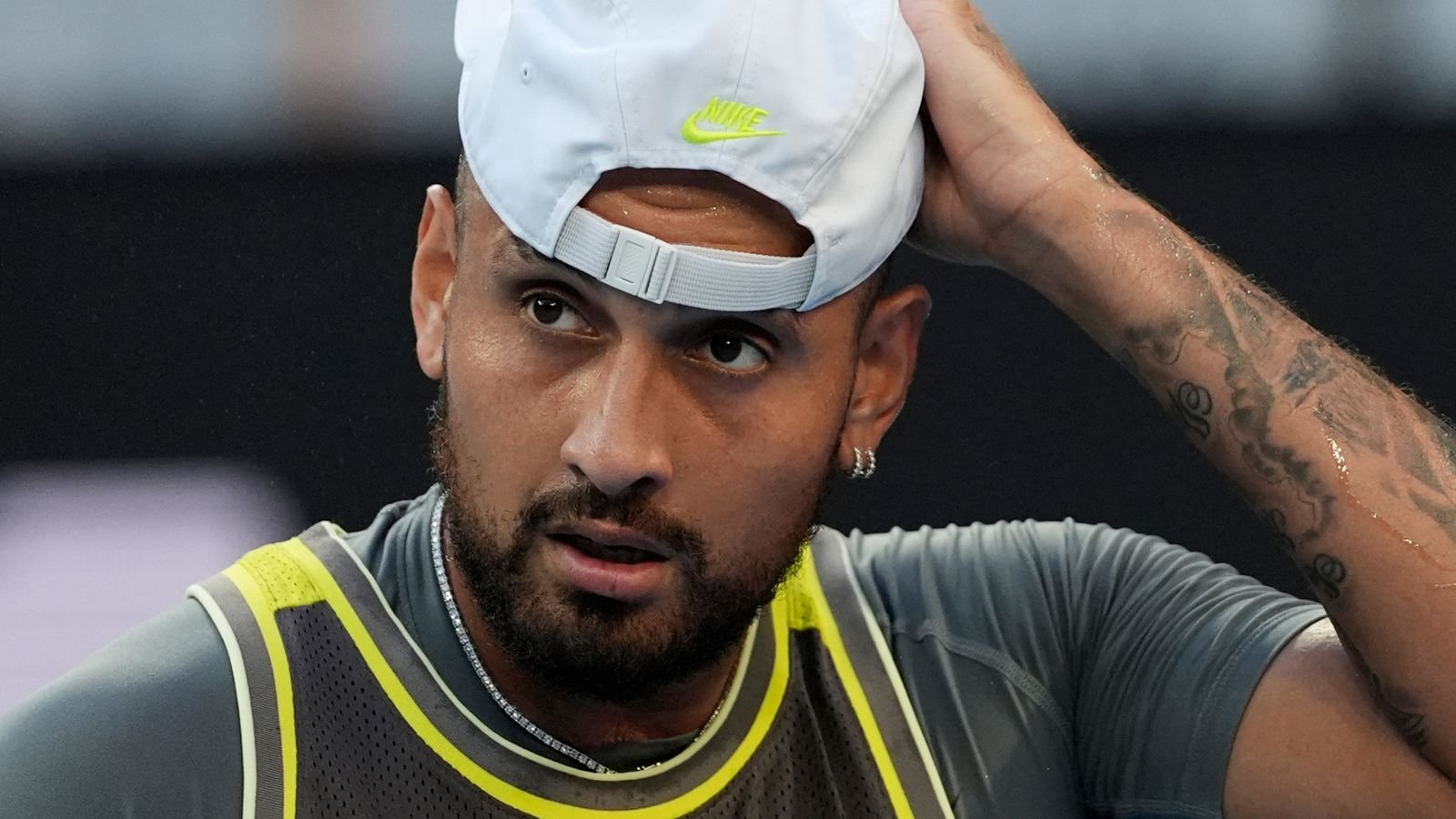
The spotlight is growing brighter ahead of the December 28 exhibition showdown between Nick Kyrgios and World No.1 Aryna Sabalenka in a modern revival of the iconic “Battle of the Sexes” concept. While framed as entertainment, the match has triggered intense debate, social chatter and psychological gamesmanship. On paper, it is a fun exhibition. In reality, the pressure sits heavily on one side, and it’s not Sabalenka’s.
Despite Kyrgios’ current ranking of 672 after an injury-riddled year, he enters the match carrying far more risk than his opponent. Sabalenka has already made it clear that she’s in a “win-win situation,” whereas Kyrgios finds himself navigating a potential reputational minefield.
Here are five reasons why Kyrgios has a lot more to lose if he stumbles in Dubai.
1. Public Expectations Still Favour Kyrgios Regardless of Ranking
While Kyrgios is technically the lower-ranked player, rankings don’t shape public expectations in a “battle of the sexes” format. Tennis fans — and even casual observers — instinctively expect a male professional to beat a female professional in a head-to-head match, especially given the difference in power, serve speed and physical strength.
That perception alone places Kyrgios in an uncomfortable position. Even if Sabalenka is the superior competitor right now, even if she is a four-time Grand Slam champion at the peak of her powers, many will still assume Kyrgios should win.
So if he loses, the narrative won’t acknowledge his ranking or injury layoff.
It will simply become:
“A men’s player lost to the women’s World No.1.”
The public storyline is unfairly tilted, and Kyrgios knows it.
2. His Past Comments About Women’s Tennis Will Come Back to Haunt Him
Kyrgios has never been shy about offering opinions on women’s tennis — some of which were controversial. He previously claimed women “can’t return men’s serves” and suggested he could beat Sabalenka without much effort. Those comments have been widely quoted and remembered.
Now he must walk into an exhibition where any slip, any competitive struggle, and especially a defeat will immediately revive those statements. Critics, commentators and social media will seize upon them instantly.
Sabalenka, on the other hand, has taken the high road. She calmly acknowledged biological differences yet insisted the event is designed to celebrate tennis, not divide it. Kyrgios, meanwhile, has far more historic baggage attached to this matchup.
A loss — or even a hard-fought match — may be framed as poetic justice.
That puts his reputation at significant risk.
3. The Media Narrative Will Focus More on Kyrgios Than on the Tennis
The match is being heavily promoted and broadcast globally, drawing far more hype than a typical exhibition. In this media environment, Kyrgios becomes the centre of discussion — not because he is the favourite competitively, but because he is the lightning rod of the event.
The broadcast framing, the historical parallels, the marketing tease of gender-versus-gender sporting spectacle — all of it puts him under the microscope.
In exhibitions, the story usually disappears after the final rally. But in this case, the result will almost certainly dominate post-match headlines.
If Kyrgios wins, many will say he “did what was expected.” If he loses, it becomes a global talking point.
Sabalenka comes in with freedom, whereas Kyrgios enters the contest with scrutiny.
Also Read: When Will Iga Swiatek Reclaim World No.1 Position? Macci Predicts It Could Be Very Soon
4. Risks Losing His Legacy as One of Tennis’ Great Natural Talents
Kyrgios’ career, though troubled by injuries and controversies, is built on flashes of undeniable brilliance. At his peak, he defeated Nadal, Djokovic and Federer, reached a Wimbledon final, and became one of the most electric entertainers in modern tennis.
A loss to Sabalenka would not erase that résumé but it would create a permanent footnote.
And footnotes in sporting history tend to grow louder over time.
“Battle of the Sexes” results linger in cultural memory far longer than typical exhibitions. Billie Jean King beating Bobby Riggs in 1973 became a lasting chapter in sporting, political and cultural discourse.
This modern exhibition will not carry the same weight but it will be remembered. If Kyrgios loses, the match could overshadow key parts of his legacy, especially among casual fans who often frame players through viral moments rather than their full careers.
5. The Pressure Dynamics Are One-Sided: Sabalenka Is in a Win-Win, Kyrgios Is in a Lose-Lose Situation
Sabalenka described the situation perfectly: “He’s in a lose-lose situation. I’m in a win-win situation.”
She’s right. If Kyrgios wins, critics will say he simply used his physical advantage. If he loses, the fallout is going to be immense. If he struggles, it becomes a global talking point.
If he shows frustration, it will be replayed endlessly.
Meanwhile, Sabalenka comes in with nothing at stake. She has already defused the biological-strength debate and framed the exhibition as fun and uplifting. Her reputation does not hinge on the outcome, but Kyrgios’ does.
Even he has acknowledged the pressure, admitting that he feels the weight of representing male tennis in such a spotlighted challenge. Sabalenka doesn’t feel that burden because she knows the match is not a referendum on her sport.
Kyrgios, however, enters with far more to prove.