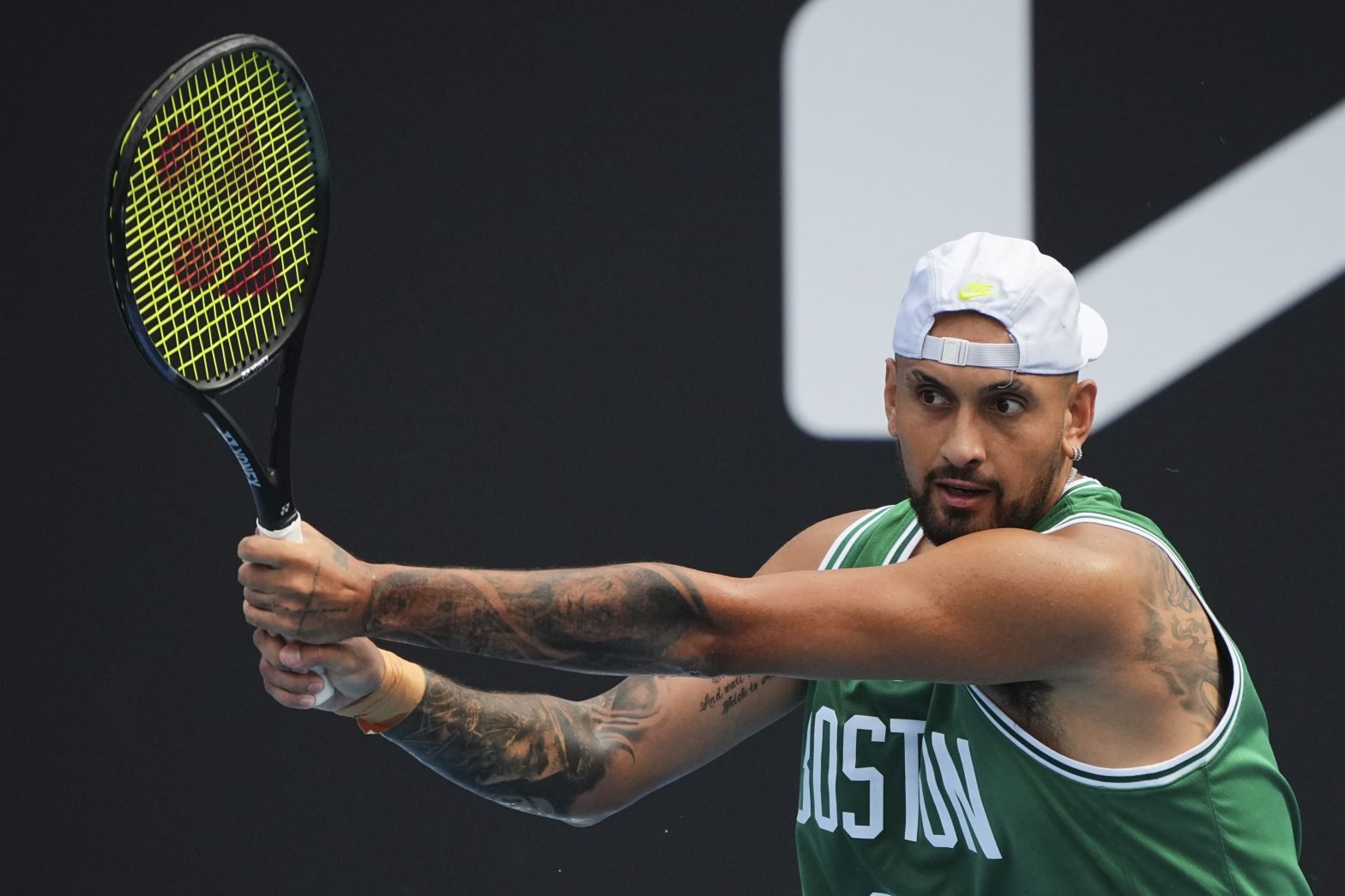
Nick Kyrgios is edging closer to a long-awaited return to competitive tennis, with the former Wimbledon finalist set to play his first ATP Tour match in 10 months after receiving a wildcard for next month’s Brisbane International. For a player whose career has swung between brilliance and breakdowns, the announcement marks a significant checkpoint in a comeback that has been repeatedly delayed by injury setbacks.
The 30-year-old Australian has been limited to just five singles matches in 2025, a stark reflection of the physical struggles that have derailed his career momentum. His most recent appearance came at the Miami Open in March, where he suffered a second-round defeat to Karen Khachanov. Since then, Kyrgios has largely been absent from the ATP Tour, slipping down the rankings and drifting out of the regular competitive spotlight.
Now ranked 673 in the world, Kyrgios finds himself in unfamiliar territory—reliant on wildcards rather than rankings to gain entry into elite tournaments. The Brisbane wildcard is not just an opportunity to play again; it is a crucial test of whether his body can withstand the demands of top-level tennis after years of recurring injuries.
Nick Kyrgios Comeback Faces Ranking Reality and Wildcard Dependence
The Nick Kyrgios comeback comes with significant caveats. Unlike several players returning from long-term injury layoffs, Kyrgios does not have a protected ranking to fall back on. That leaves him dependent on tournament organisers’ discretion, including for the first Grand Slam of 2026 at the Australian Open.
His recent Grand Slam record underlines how far he has drifted from the sport’s elite. Kyrgios has played just one Grand Slam match since 2022—a first-round defeat to Britain’s Jacob Fearnley at Melbourne Park earlier this year. Once a regular fixture in the second week of majors and a finalist at Wimbledon, he now faces the reality of having to rebuild credibility and fitness simultaneously.
Brisbane is expected to provide a clearer picture of where Kyrgios stands physically. The tournament, traditionally a launching pad for Australian Open campaigns, will test his match sharpness, movement, and durability across multiple rounds—areas that have been major concerns since his injury troubles began.
Those issues have included serious wrist, knee, and foot problems, injuries that have not only limited his playing time but also disrupted any consistent training blocks. Each attempted comeback has been followed by another setback, making this return particularly fragile.
Nick Kyrgios Comeback Boosted by Exhibitions and High-Profile Spotlight
Before stepping back onto the ATP Tour, Nick Kyrgios’ comeback will get an early dose of attention through a high-profile exhibition match. On December 28, he is scheduled to face women’s world number one Aryna Sabalenka in a Battle of the Sexes-style event, a spectacle designed as much for entertainment as for competitive rhythm.
Kyrgios will also take part in the Kooyong Classic in January, a traditional warm-up event ahead of the Australian Open. These exhibitions are expected to serve a dual purpose—easing him back into match play while allowing organisers and fans to gauge his physical condition before the grind of official competition begins.
For Kyrgios, the exhibitions are more than just showpieces. They offer valuable court time without the ranking pressure of ATP points, giving him space to test his body under match conditions. However, the real scrutiny will arrive once the Brisbane International begins, where every movement will be analysed and every service game measured against the standards he once set.
Despite the uncertainty, Kyrgios’ return carries undeniable intrigue. Few players generate as much attention, debate, or box-office appeal. Tournament organisers are keenly aware of that, and the wildcard entry reflects both his past achievements and his enduring draw.
Whether this comeback evolves into a sustained return or becomes another brief chapter interrupted by injury remains unanswered. But one thing is for sure that Brisbane will define the direction of the next phase of his career.