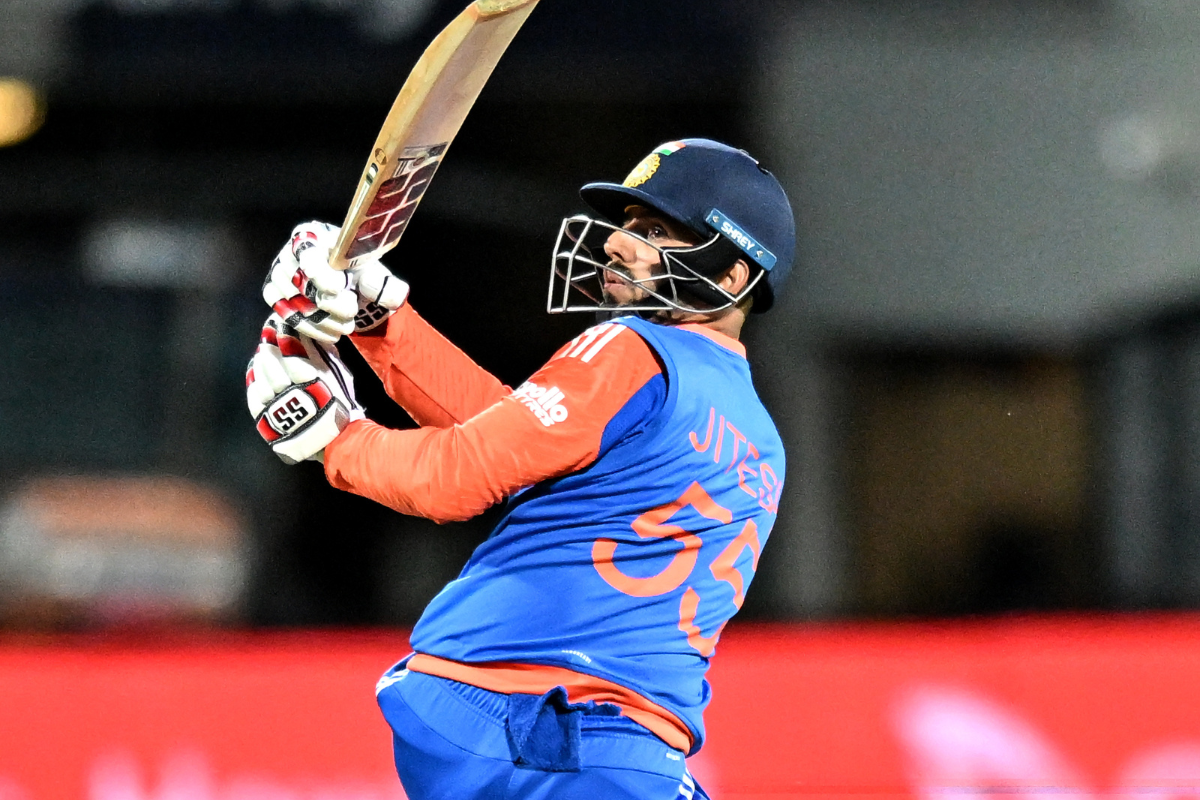
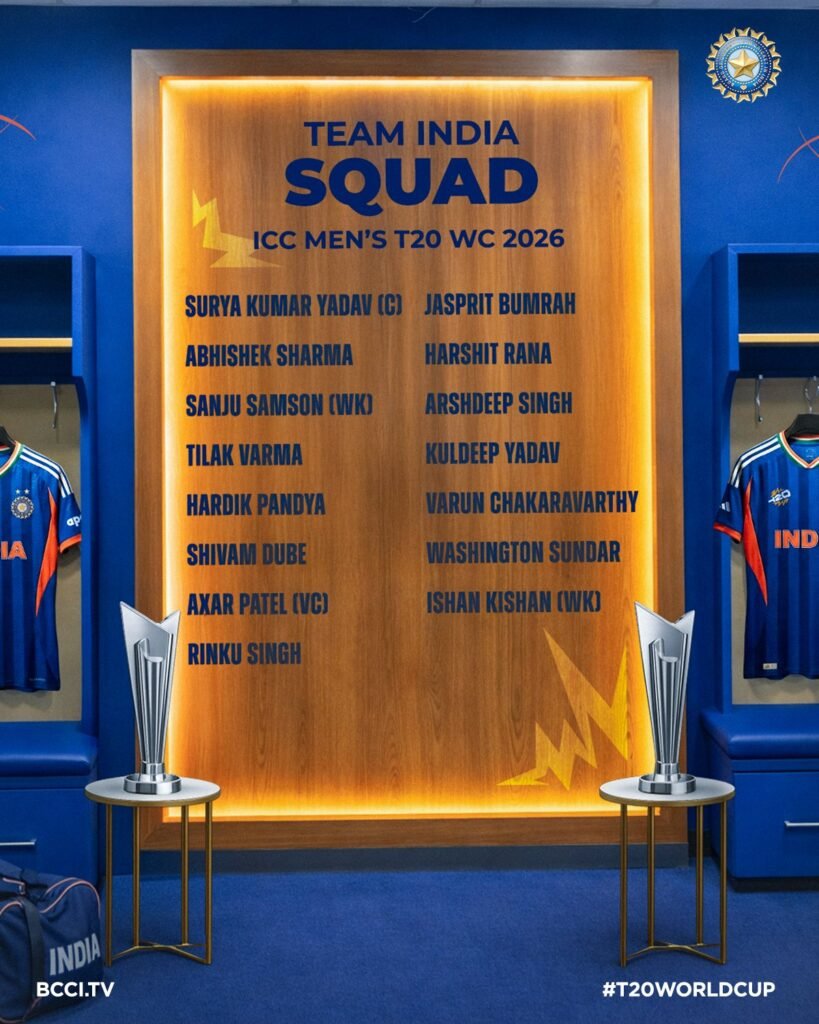
Jitesh Sharma’s omission from the India squad for the T20 World Cup 2026 looks harsh on the surface, especially given his form and consistency, but the decision was shaped by Shubman Gill’s struggles and the team combination India ultimately pivoted towards. India were the first to enter the T20 World Cup 2026 squads list when they made their announcement with a couple of shocking calls.
EXPLAINED: Jitesh Sharma Omission From India Squad For T20 World Cup 2026
Jitesh Sharma had quietly cemented himself as a reliable middle-order option for India heading into the T20 World Cup 2026. He had not put a foot wrong in his role, whether it was finishing innings, adapting to tough situations, or contributing behind the stumps.
However, selection at World Cups is rarely about individual performance alone. The India squad for the T20 World Cup 2026 was shaped by balance, flexibility, and backup options, and that is where the domino effect began.
Why Shubman Gill’s Form Changed Everything For The India Squad
Shubman Gill’s inability to find runs consistently in T20Is forced India into a late rethink. Despite being vice-captain and a first-choice opener for months, Gill went into the final selection phase without a single fifty in his last 15 T20I innings and a strike rate that did not fully justify his spot.
Dropping Gill created a vacancy at the top of the order, and once that happened, India did not want a straight like-for-like replacement.
India could have simply brought in Yashasvi Jaiswal as a direct replacement for Shubman Gill. That would have preserved the existing middle order and kept Jitesh Sharma in the India squad.
But that option came with a problem.
- Rinku Singh or Shivam Dube would have been squeezed out.
- India wanted flexibility without sacrificing batting depth
This forced the selectors to think differently and look for players who could fulfill a dual role.
In-Form Ishan Kishan Offered Dual Role
Ishan Kishan’s return to form in domestic cricket gave the selectors an alternative path. Kishan was the top scorer in the Syed Mushtaq Ali Trophy, hit the most sixes in the tournament, and led Jharkhand to the title.
More importantly for the India squad, Ishan Kishan could open and keep wickets and provided cover for two areas by using up only one slot.
As Ajit Agarkar explained during the press conference, India wanted a wicketkeeper who could bat higher up the order. That single requirement changed the squad structure.
“We are looking at the combination. If the keeper is going to bat at the top, at the moment Jitesh is there and he has not done too much wrong. But we need to look at the combination and a keeper at the top,” Agarkar said in the press conference.
Why Jitesh Sharma Became The Casualty In The India Squad
Once Ishan Kishan was selected as both a backup opener and backup wicketkeeper, Jitesh Sharma’s role became redundant in the eyes of the selectors. That does not mean Jitesh underperformed, which is why he has garnered a lot of support from fans too. RCB’s official handle posted a tweet in support of Jitesh after the squad announcement.
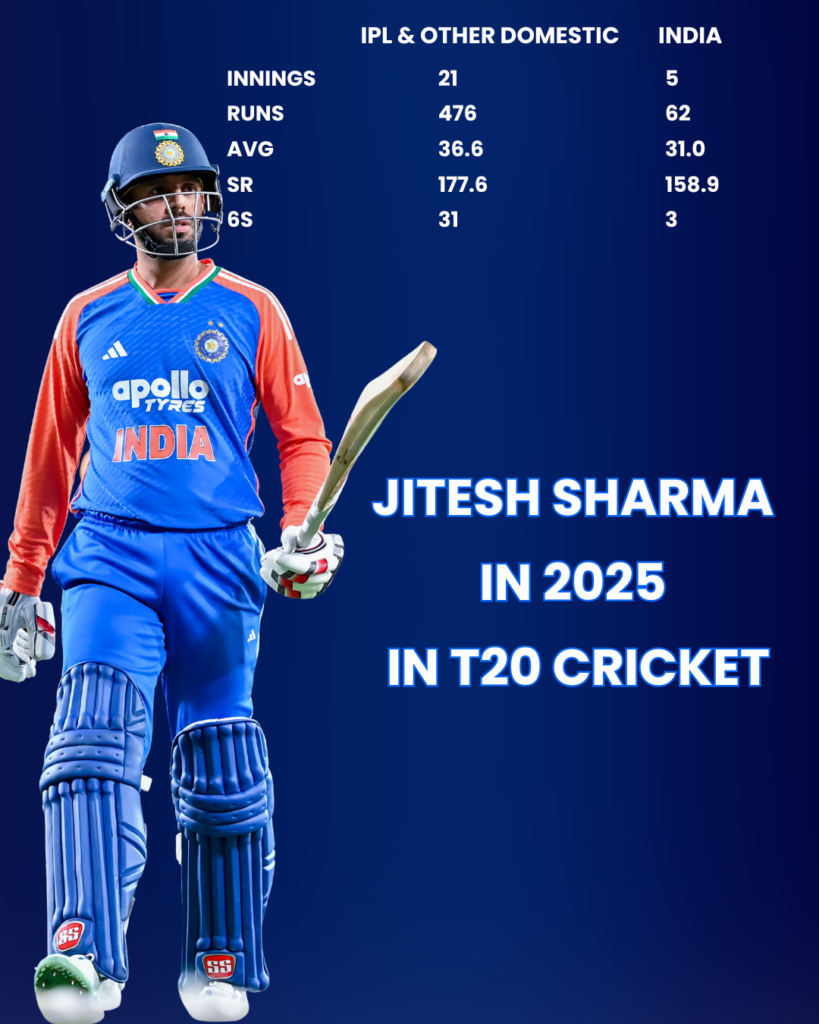
In fact, Jitesh Sharma’s 2025 numbers were strong across IPL, domestic cricket, and India games. His strike rates and averages were elite for a middle-order batter in his role. He was excellent behind the stumps, even outperforming Sanju Samson comprehensively as a keeper. But squad balance mattered more than form.
Jitesh Sharma paid the price for Shubman Gill’s lack of T20I form. Once Gill was dropped, India needed a replacement who solved multiple problems at once. Jitesh became unfortunate collateral damage, not a reflection of his quality or performances.
Jitesh Sharma deserved to be in the India squad on form alone. But T20 World Cup selections are rarely that simple. This was a verdict on team balance after Shubman Gill’s struggles. And in that equation, Jitesh Sharma paid the price.