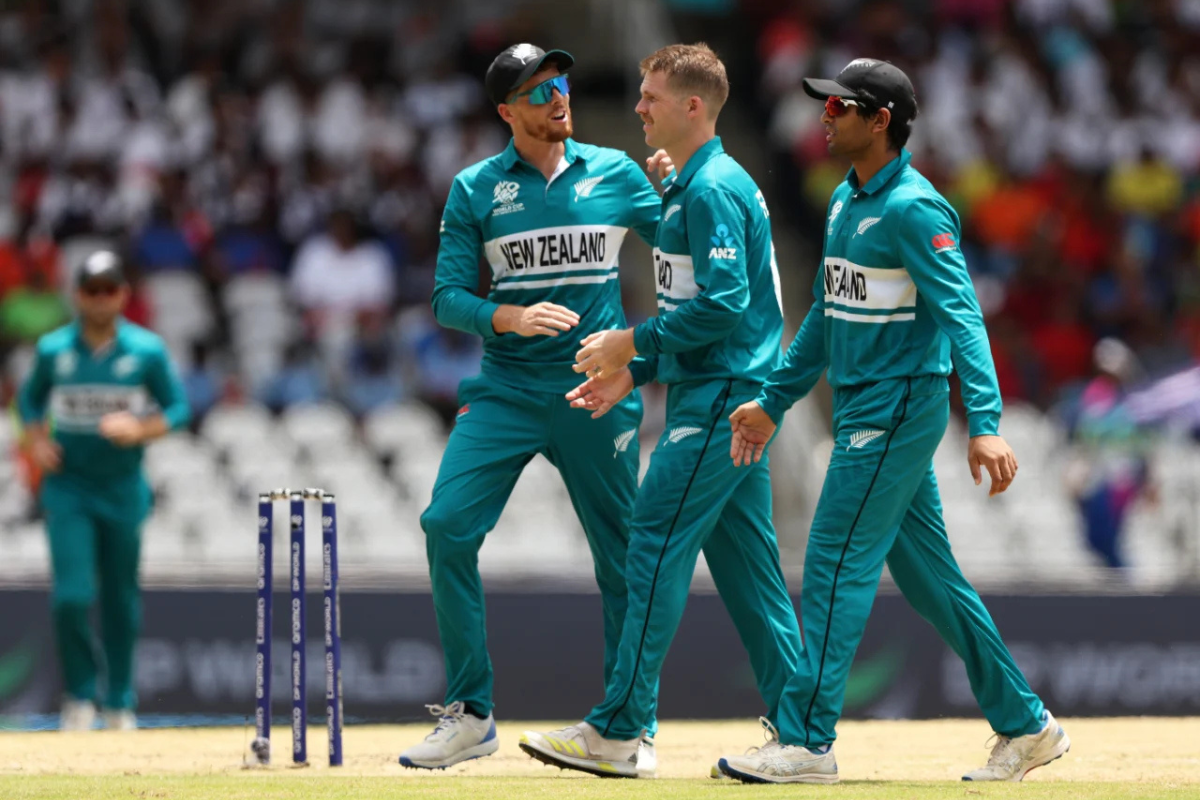
New Zealand Squad For T20 World Cup 2026 had some surprising calls with young opener Tim Robinson ignored and pacer Lockie Ferguson, all-rounder Jimmy Neesham backed.
New Zealand have opted for experience, flexibility and clearly defined roles over raw numbers in naming their squad for the 2026 T20 World Cup in India and Sri Lanka. While the core of the group remains familiar, several selection calls have sparked debate, most notably the omission of in-form batter Tim Robinson, the preference for Jimmy Neesham over Zakary Foulkes, and the decision to back Lockie Ferguson despite his limited T20I cricket since the last World Cup.
Each call reflects New Zealand’s broader selection philosophy, one that prioritises balance, multi-skill players and proven performers in global tournaments over standalone statistical returns. That said, veteran batter Kane Williamson does not find a place and will be a notable absentee in the all T20 World Cup 2026 squads.
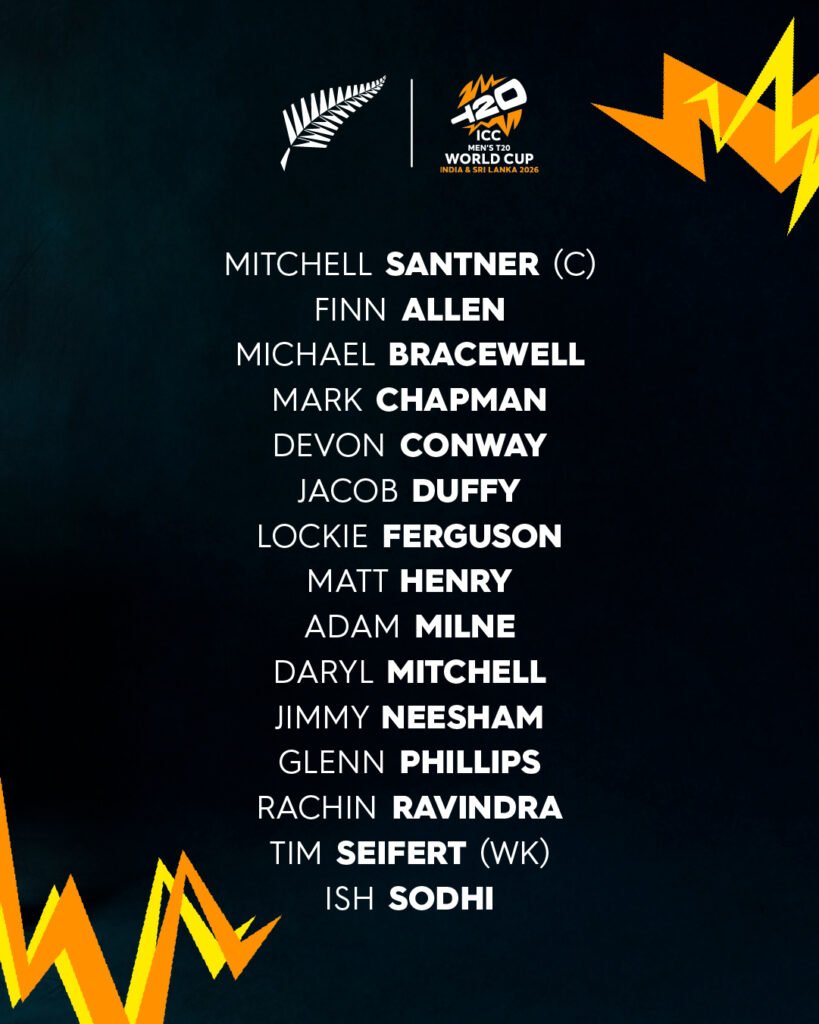
New Zealand Squad For T20 World Cup 2026
Mitchell Santner (c), Finn Allen, Michael Bracewell, Mark Chapman, Devon Conway, Jacob Duffy, Lockie Ferguson, Matt Henry, Daryl Mitchell, Adam Milne, James Neesham, Glenn Phillips, Rachin Ravindra, Tim Seifert, Ish Sodhi. Travelling reserve: Kyle Jamieson
Tim Robinson Ignored Despite Strong Returns Since T20 World Cup 2024
The biggest surprise in New Zealand’s squad is the omission of Tim Robinson, despite his strong numbers over the last two years.
Since his debut, Robinson has scored 457 runs in 19 matches at an average of 35.15 and a strike rate of 139.32, including a century and a fifty. Those returns compare favourably with several middle-order options in the squad, and even surpass some of New Zealand’s established names on raw output.
However, New Zealand’s selection appears to have been driven by role clarity and squad balance rather than individual batting form.
With Tim Seifert, Finn Allen and Rachin Ravindra seen as the first-choice top three, the selectors preferred Devon Conway as a reserve option due to his ability to both anchor an innings and keep wickets. That flexibility seemingly counted more than Robinson’s standalone numbers.
In short, Robinson has paid the price for New Zealand’s preference for multi-skill players in a tight 15-man squad.
Jimmy Neesham Preferred Over Zakary Foulkes for All-Round Balance
Another major call in the New Zealand squad for T20 World Cup 2026 was Jimmy Neesham’s inclusion ahead of Zakary Foulkes, despite Foulkes having solid numbers since the last edition of the tournament.
Foulkes has taken 17 wickets in 15 matches at an economy of 8.58, while also contributing useful lower-order runs. But New Zealand clearly leaned towards experience and defined role execution in pressure tournaments. Also, Neesham’s batting returns tipped the scales in his favour.
Neesham, meanwhile, has delivered impactful spells with the ball since 2024, picking up 17 wickets in 14 matches at an average of 14.70 and a strike rate of 10.4, including a five-wicket haul. His recent 4 for 26 against Australia reinforced his ability to influence games in short bursts.
Head coach Rob Walter explained the thinking behind such calls, saying:
“First and foremost you need to cover all bases… we wanted to make sure we had a strong pace-bowling battery, understanding the roles they play.”
Neesham’s familiarity with global tournaments, finishing roles, and high-pressure moments ultimately tilted the decision in his favour over Foulkes.
Lockie Ferguson Picked Despite Limited T20I Cricket Since 2024
On paper, Lockie Ferguson’s selection looks risky. He has played only one T20I since the 2024 T20 World Cup due to injury interruptions, in November 2024.
However, New Zealand’s selectors have backed Ferguson’s elite skillset and sustained franchise form, rather than international appearances alone.
Across all T20 cricket since the 2024 T20 World Cup, Ferguson has taken 52 wickets in 43 matches at an average of 19.84 and an economy rate of 7.45 — elite numbers for a high-pace bowler operating largely at the death.
His performances across leagues underline that trust:
- MLC 2024: 10 wickets at 18.4
- ILT20 2024–25: 11 wickets at 18.18
- BBL 2024–25: 8 wickets at 21.5
- IPL 2025: 5 wickets in 4 games
- The Hundred 2025: 7 wickets despite higher economy
Even in his lone T20I appearance since 2024, Ferguson produced a match-defining 3 for 7 in Sri Lanka.
For New Zealand, Ferguson remains a rare commodity — a genuine express pacer with proven success in subcontinent conditions and global leagues, something no like-for-like replacement exists for.
Experience and Role Certainty Trumped Raw Numbers
Overall, New Zealand’s squad selection reflects a clear philosophical shift. Instead of rewarding isolated statistical excellence, selectors prioritised:
- Players who fit clearly defined roles
- Multi-skill cricketers who improve XI flexibility
- Proven performers in high-pressure tournaments
With 1,064 combined T20I caps, New Zealand have gone all-in on experience, adaptability, and bowling depth, even if it meant leaving out in-form specialists like Tim Robinson.
It is a calculated gamble, but one firmly rooted in how New Zealand want to compete in Indian and Sri Lankan conditions.