The Wankhede Stadium had already fallen silent. Sanju Samson’s savage 101 not out had buried Mumbai Indians under a target of 208, Akeal Hosein had ripped through the top order in the first three overs, and the match — CSK’s eventual 103-run romp, the largest victory margin in the history of this rivalry — was all but settled. And yet, the scoreboard was not the story everyone was talking about.
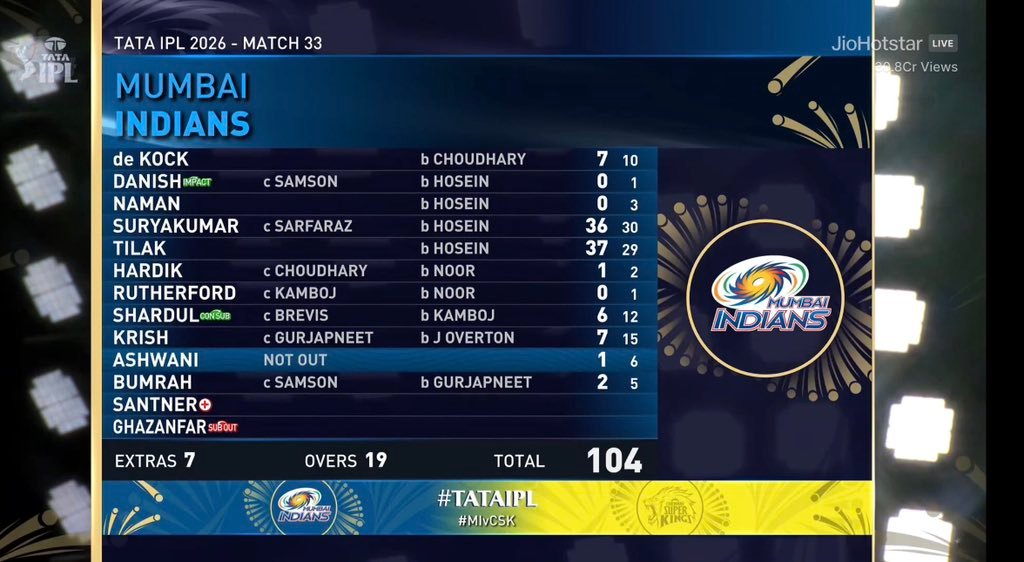
When Shardul Thakur walked out to bat at the fall of Sherfane Rutherford’s wicket, millions watching at home did a collective double-take. Thakur was not in the playing XI. He was not the impact player — that was Danish Malewar, who had already replaced Allah Ghazanfar at the end of the 16th over during the CSK innings. Thakur, in theory, had no business being out in the middle.
He was there as a concussion substitute for Mitchell Santner. And that is where the questions began.
Check latest MI qualification scenarios

What Happened To Mitchell Santner
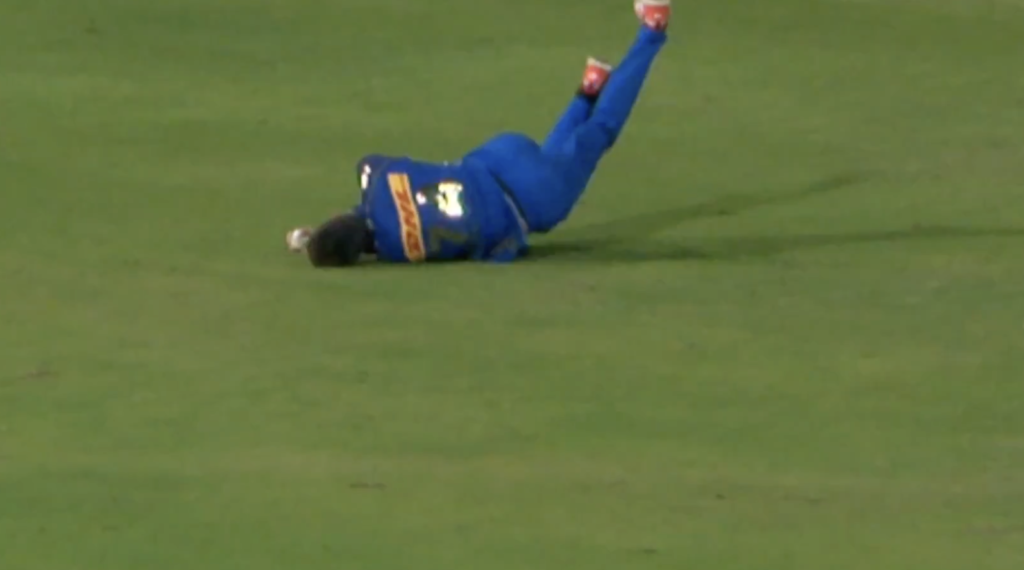
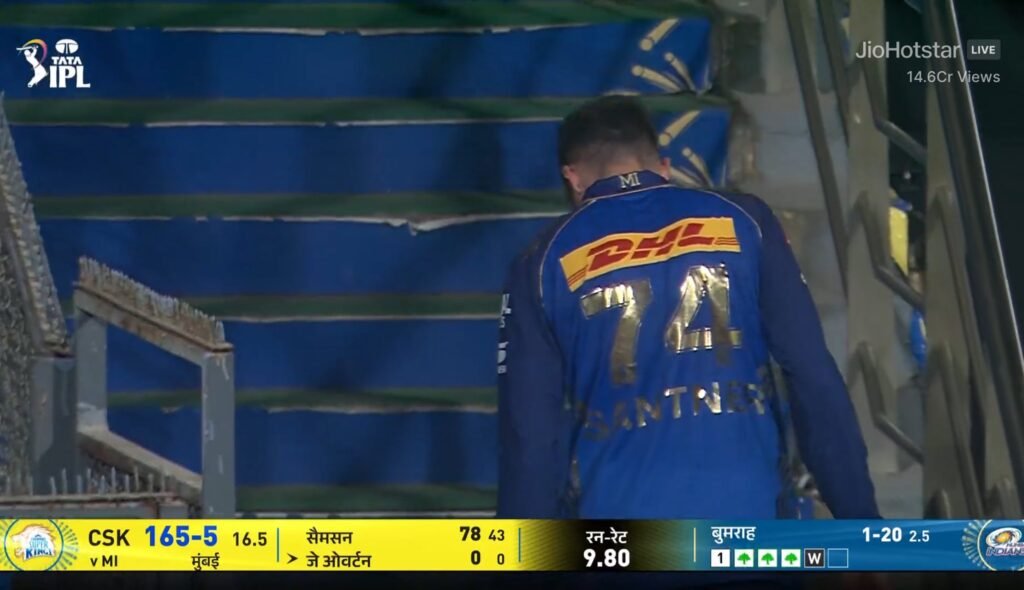
The incident occurred on the fifth ball of the 17th over of CSK’s innings. Jasprit Bumrah bowled a full toss, Kartik Sharma miscued it, and Mitchell Santner dived full stretch to complete the catch. It was a brilliant piece of fielding. It also ended his evening.
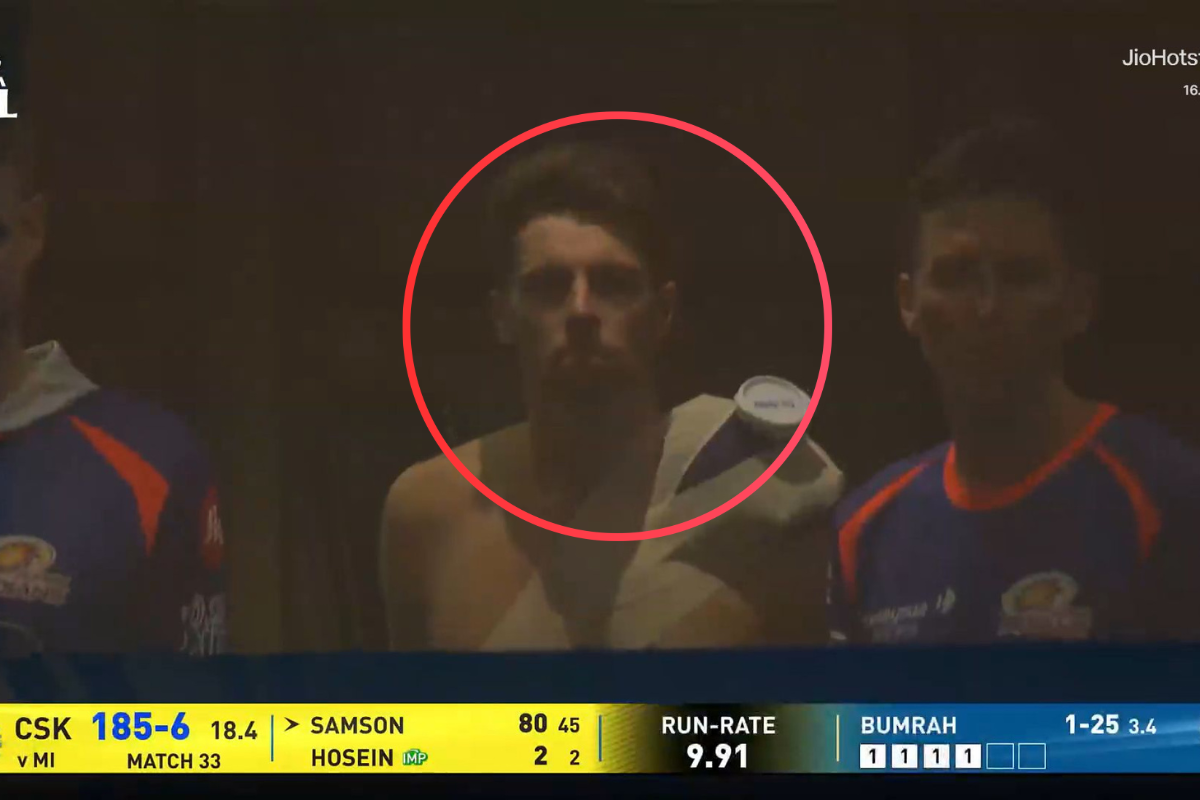
Santner landed heavily, and the replays painted an uncomfortable picture. The New Zealand captain immediately clutched his left shoulder — his bowling arm — and was visibly grimacing as the physio rushed on. Heavy strapping was applied to the shoulder. He walked off the field and did not return for the rest of the match.
What happened next, however, was not a shoulder-injury substitution. It was a concussion substitution.
How Were Mumbai Indians Allowed Concussion Substitute For Mitchell Santner Shoulder Injury?
MI head coach Mahela Jayawardene, speaking after the match, insisted the shoulder was only part of the story.
“Santner hit his head first, the neck and obviously, the shoulder as well. He then went for a scan. Once he got back, he was lying down. Yes, the ice was there for the shoulder, but he felt that he wasn’t stable, so we took him for a scan in that situation,” Jayawardene said.
He went further, describing Santner’s symptoms in the dressing room.
“He went for a scan. Once he got back, he felt dizziness. So, he was lying down. Yes, the ice was there for the shoulder. But, he felt he wasn’t stable. So, we took him for a scan. We requested [for a concussion substitute]. Obviously, it is the match referee and the umpires’ discretion. They allowed Shardul.”
This is true according to footage as well. During the replays, one can see Santner banging his head onto the ground (see below pic) when attempting the catch which hurt his shoulders too.
What The Rules Actually Say
Under ICC Playing Conditions — which the IPL adopts with its own amendments — a concussion substitute is permitted only when a player sustains a head or neck injury during active play on the field. The injury must result in a confirmed or suspected concussion, formally diagnosed by the team’s medical representative. The team then submits a Concussion Replacement Request to the match referee, specifying the incident, the time, the symptoms, and the proposed like-for-like replacement.
The match referee’s job is to evaluate two things: whether the concussion claim is legitimate, and whether the proposed replacement qualifies as like-for-like — meaning the substitute should not excessively advantage the team for the remainder of the match.
Crucially, the match referee’s decision is final. There is no appeal mechanism.
From a medical standpoint, the ICC’s own Concussion Management Guidelines acknowledge that approximately 20 per cent of concussion cases have a delayed onset. A concussion can, in a technical sense, only be completely excluded 48 hours after an incident of significant head or neck trauma. This means a player who initially presents with a shoulder complaint can still develop concussion symptoms — dizziness, instability, nausea — in the minutes and hours that follow.
This is the window MI appears to have operated within.
The Optics Problem
None of this, however, changes what hundreds of thousands of viewers saw with their own eyes: a player landing on his shoulder, holding his shoulder, being strapped on his shoulder, and then being replaced under a concussion rule.
The optics were, to put it diplomatically, not ideal. Social media erupted. Fans accused MI of gaming the system, questioned the match officials’ judgement, and pointed out the obvious — that MI had effectively fielded 13 players across the match: 11 in the original XI, one impact player (Malewar), and one concussion substitute (Thakur).
And this is the part that makes this incident genuinely unprecedented and worth dissecting.
The 13-Player Question: Can A Team Use Both?
Here is the mechanical reality of what happened in Match 33.
MI named their XI with Santner in it. They named five impact player options, including both Malewar and Thakur. At the end of the 16th over, they activated Malewar as the impact player, replacing Ghazanfar — a tactical substitution designed to bolster their batting for the chase. One over later, Santner was injured.
Now, the impact player rule and the concussion substitute rule exist under entirely separate regulatory frameworks. The impact player is an IPL-specific tactical innovation introduced in 2023, allowing one strategic substitution per team per match. The concussion substitute is an ICC-mandated player welfare provision, introduced globally in 2019 following the tragic death of Phillip Hughes, designed to protect players from the dangers of continuing to play with a head injury.
There is nothing in either rule that prohibits a team from using both in the same match. The impact player is a tactical choice. The concussion substitute is a medical necessity. They are, in regulatory terms, entirely separate instruments. The match referee approved Thakur’s inclusion as a like-for-like replacement for Santner — both are bowling all-rounders — and the substitution stood.
This incident exposes a genuine grey area in the IPL’s playing conditions — one that the BCCI and IPL Governing Council may need to address before the playoffs.
The concussion substitute rule was built for a world without the impact player. In international cricket, you have your XI and that is it — a concussion sub simply ensures a team is not left with ten functional players due to a head injury. In the IPL, the impact player already gives teams a 12th participant. A concussion substitute on top of that creates a 13th.
It is not difficult to imagine a scenario where this combination could be exploited more cynically than it was on Thursday night.
Follow all latest cricket news and updates here on The Dakia.