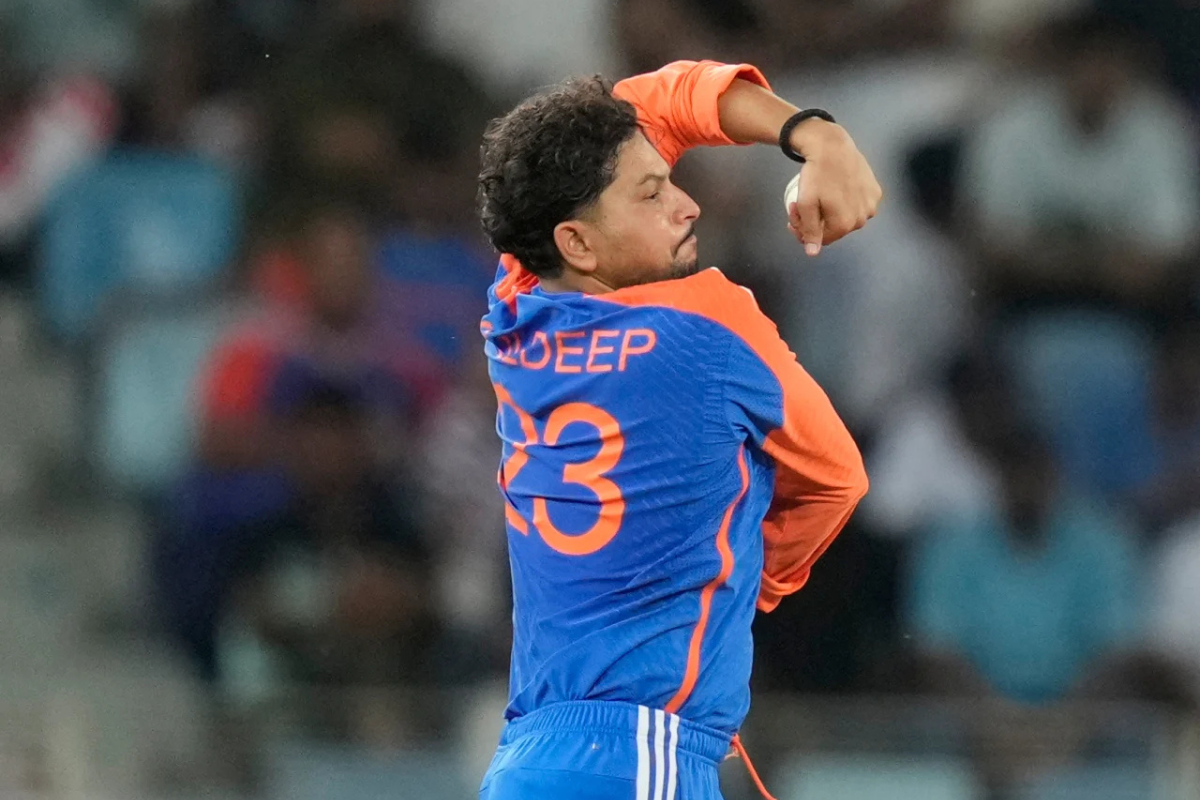
Kuldeep Yadav could pose a major headache for India as they head into T20 World Cup 2026.
Recently, Rohit Sharma, the T20 World Cup-winning captain, pointed out the combination crunch India squad for T20 World Cup 2026 poses. India can realistically field Kuldeep Yadav and Varun Chakravarthy together only if they go with two seamers, which immediately turns selection into a balance problem.
That debate has sharpened because Kuldeep Yadav’s recent ODI returns have been modest. In the just-finished three-match ODI series against New Zealand, which India lost 1–2, Kuldeep managed three wickets across three games and was frequently targeted once batters decided to attack him.
Former offspinner Ravichandran Ashwin, reacting to the same theme, has also flagged the mental side of it, suggesting the way New Zealand went after Kuldeep could affect confidence heading into a World Cup where India will need their middle-overs spin to both control and strike.
Kuldeep Yadav – New Zealand in India ODI Series (2025/26)
| Matches | Overs | Wickets | Average | Economy |
|---|---|---|---|---|
| 3 | 25.0 | 3 | 60.66 | 7.28 |
Why Is Kuldeep Yadav a Problem for T20 World Cup 2026?
The concern around Kuldeep is no longer about talent or experience. It is about output under modern white-ball pressure.
A key technical issue has been declining ball-spin and revolutions. Broadcast data across recent series has shown Kuldeep getting less turn than expected for a wrist-spinner, at times even less than finger spinners. For a bowler who relies on drift before pitching and sharp deviation after it, reduced revs allow batters to sit back, line him up, and hit through the line.
There is also a pattern once batters “get a hold of him.” After early success in spells or tournaments, Kuldeep has struggled to absorb pressure. Economy rates climb, wickets dry up, and captains are often forced to look elsewhere. In white-ball cricket, where damage control is as valuable as wickets, this drop-off hurts his case.
Add to that a hot-and-cold cycle across phases and series. Teams study him quickly, adjust their plans, and Kuldeep has sometimes found it hard to evolve mid-cycle. That shows up not just in numbers, but in captain usage, with overs being held back or reassigned when conditions flatten.
Why Varun Chakravarthy Is Well Ahead of Kuldeep Yadav
The comparison with Varun Chakravarthy are slightly less relevant at this point. Varun is clearly the better defensive bowler and more suited to T20 cricket than Kuldeep. That said, Kuldeep is the better wicket-taker when he’s at his best. This is reflected in how Kuldeep thrives when playing alongside Varun in T20Is.
Kuldeep Yadav vs Varun Chakravarthy – T20Is for India (When Playing Together)
| Player | Matches | Overs | Wickets | Average | Economy |
|---|---|---|---|---|---|
| Kuldeep Yadav | 11 | 33.3 | 22 | 10.81 | 7.10 |
| Varun Chakravarthy | 11 | 37.3 | 12 | 17.50 | 5.60 |
But when not at his best, Kuldeep could diminish the advantage Varun provides with his defensive bowling because he leaks runs when not at his best as we saw in the New Zealand ODIs, where Daryl Mitchell took him apart.
Ashwin also highlighted how Kuldeep’s confidence has been down and when that happens, he seems to run out of ideas and doesn’t think on his feet.
“My only submission to Kuldeep Yadav would be asking him to experiment a little more,” Ashwin said on his YouTube channel. “When a batter is batting as good as Daryl Mitchell is against you, and wickets aren’t falling, we have to make the play. His wagon wheel will show you no runs on the offside because of a closed bottom hand. I am concerned that Kuldeep didn’t do this in all three ODIs.”
Varun, on the other hand, is someone who thinks on the go. He brings pace, overspin, and bounce. Bowling in the high-90s and touching 100 kph, he is physically harder to attack even when batters read him. His trajectory makes sweeping risky and stepping down the pitch uncomfortable, directly countering two of the most common T20 batting strategies.
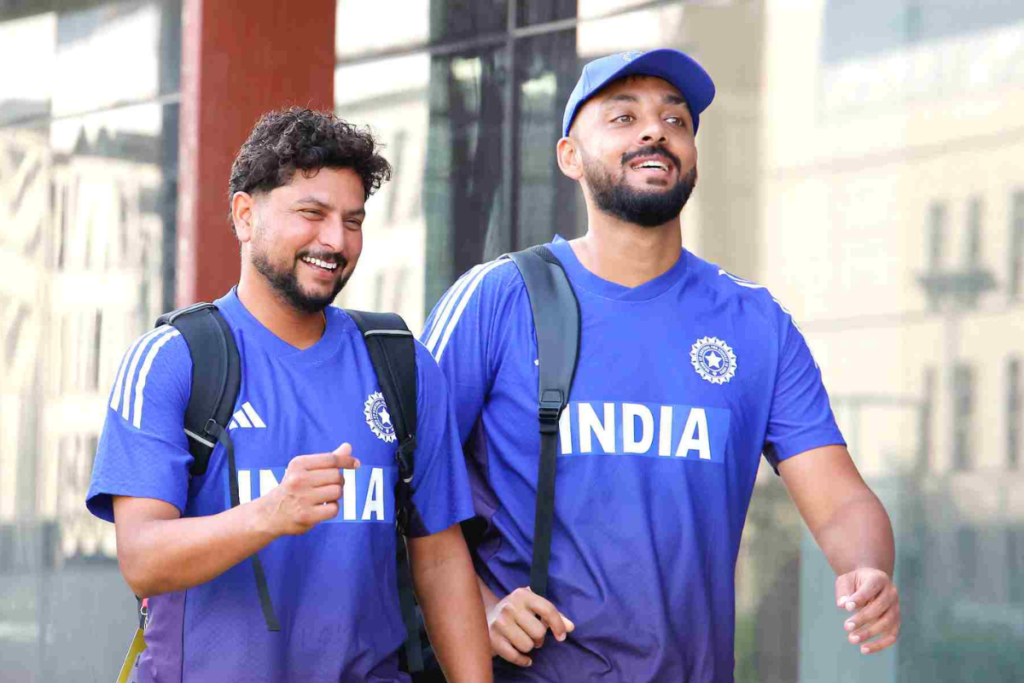
Crucially, Varun holds his shape under attack. A boundary does not automatically lead to loss of control. He can be hit, reset, and still take wickets, which gives captains the confidence to persist with him in high-risk overs. That higher “floor” matters in tournament cricket, where one bad spell can decide games.
Kuldeep, at his best, still has a higher ceiling as a pure spinner. But Varun’s repeatability, pace-driven difficulty, and ability to bowl way better defensively explain why he is increasingly viewed as the safer white-ball option right now.
For now, India have kept both in the plan and it is very likely that we’ll see an attack featuring three spinners and three pacers too at the T20 World Cup with Axar Patel and Hardik Pandya in the mix. But that would come with a compromise — a tail starting at No.8 with way lesser than ideal support for Hardik Pandya around him.
With the five-match T20I series against New Zealand acting as the final runway, every spell from Kuldeep will be judged, especially after how the ODI series went.
For schedule, venues and latest updates, see our T20 World Cup 2026 news page.