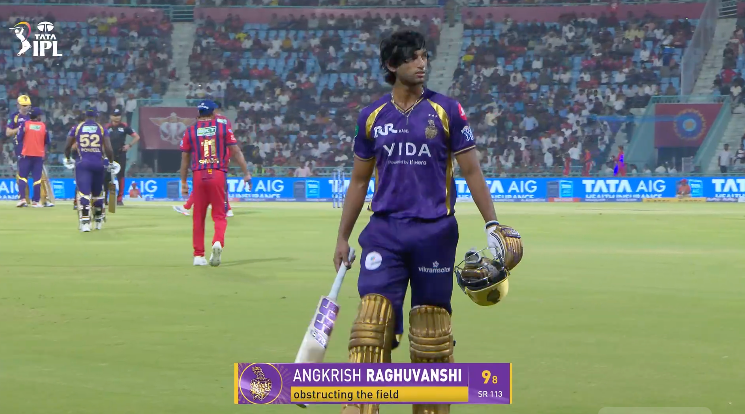
Angkrish Raghuvanshi out obstructing the field during the LSG vs KKR IPL 2026 match at Ekana Cricket Stadium on April 26 is garnering attention — a rare, controversial dismissal that left the KKR camp furious and cricket fans scrambling to understand what just happened.
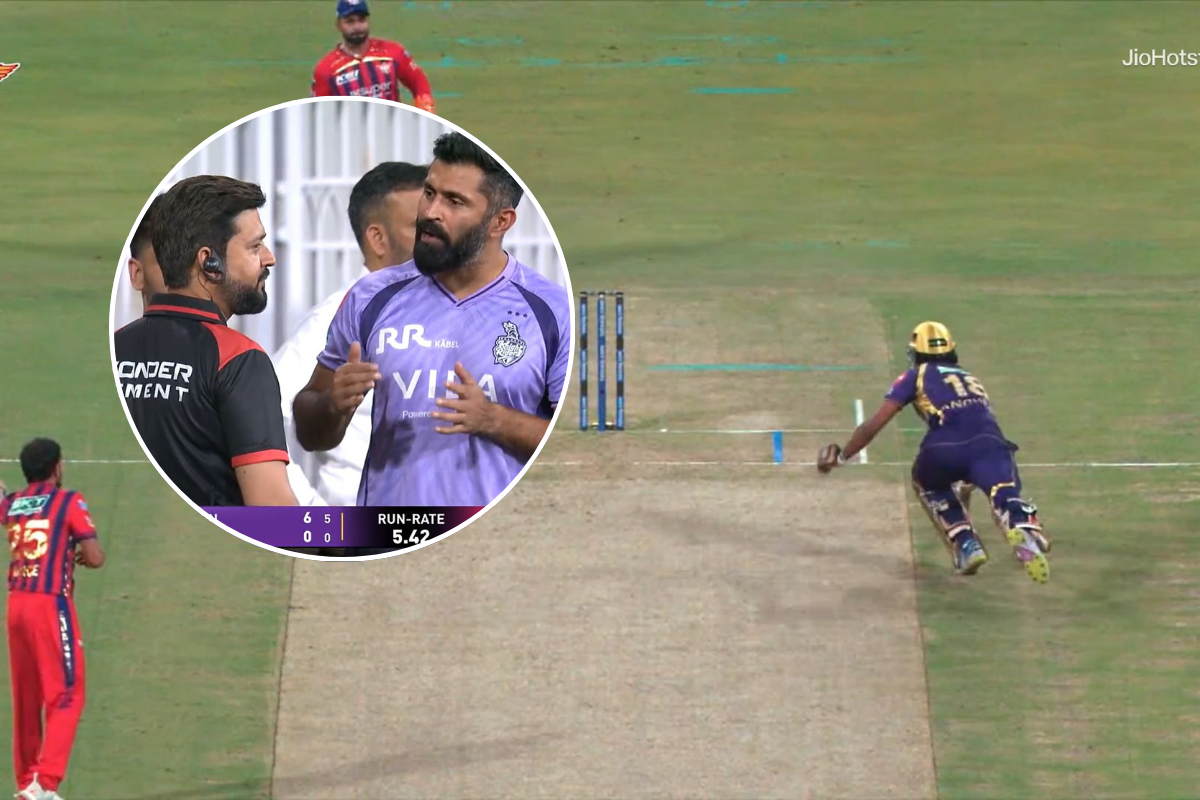
The incident occurred in the 4.6 over of KKR’s innings. Prince Yadav bowled a back-of-a-length delivery on middle and off. Raghuvanshi, who had scored 9 off 8 balls, punched the ball to mid-on and set off for a quick single. Cameron Green, his batting partner, sent him back from halfway down the pitch. What followed was the critical moment.
[WATCH] Angkrish Raghuvanshi obstructing the field dismissal, LSG vs KKR, IPL 2026
What Exactly Happened on the Field
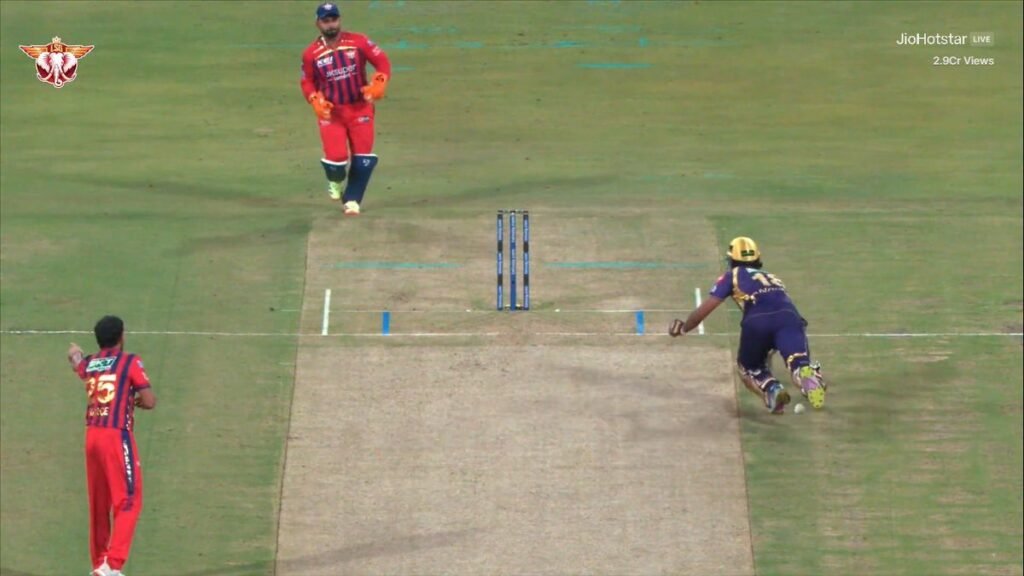
As Raghuvanshi turned back to regain his crease, Mohammed Shami fielded the ball at mid-on and fired a throw at the stumps. Raghuvanshi, mid-turn, sprawled across the turf and the throw from Shami hit him — or came close enough to warrant a review.
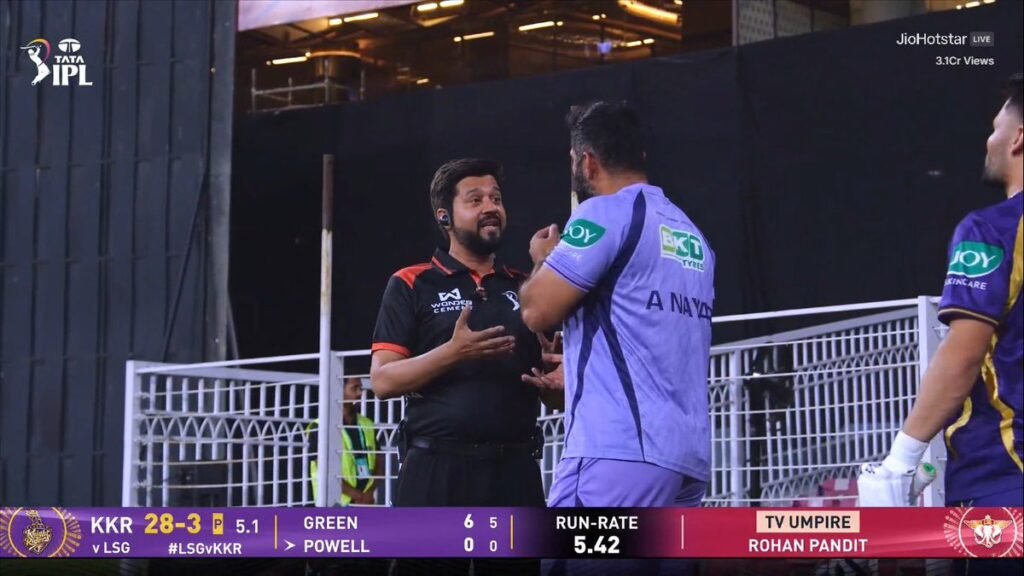
LSG initially made only a half-hearted appeal in real time. But the third umpire was called in, and the replays told a different story.
The key question: did Raghuvanshi change his direction while turning back to his crease?
The third umpire determined that Raghuvanshi’s turning radius was wider than what would be considered natural. He appeared to glance at the ball during the turn, and his dive took him outside the cut strip — into the path of Shami’s throw. The verdict: out, obstructing the field.
Raghuvanshi was visibly unhappy with the decision. KKR were now three wickets down inside the powerplay, with just 31 runs on the board.
ALSO READ: Highest Run Chases in IPL
What Is Obstructing The Field? The Law Explained
Obstructing the field is one of the ten ways a batter can be dismissed in cricket. It is governed by Law 37 of the MCC Laws of Cricket, and it is among the rarest modes of dismissal in the sport.
Here’s what the law states:
Law 37.1.1 says that either batter is out obstructing the field if, while the ball is in play, they wilfully attempt to obstruct or distract the fielding side by word or action.
The crucial sub-clause for this incident is Law 37.1.4, which specifically addresses run-out situations. It states that if an umpire feels a batter, while running between the wickets, has significantly changed their direction without probable cause and thereby obstructed a fielder’s attempt to effect a run out, the batter should be given out.
When Is a Batter NOT Out?
Law 37.2 provides the exceptions. A batter is not out obstructing the field if:
- The obstruction or distraction is accidental
- The obstruction occurs to avoid injury
- The striker makes a lawful second strike to guard the wicket
The entire dismissal hinges on intent. The obstruction must be wilful. Accidental contact with a throw while running between wickets is not grounds for dismissal — which is precisely why this decision was so contentious.
Why Was Angkrish Raghuvanshi Obstructing The Field Incident So Controversial?
The debate centres on Raghuvanshi’s turning radius. When a batter is sent back mid-pitch, they inevitably have to turn and run back. The question is whether the arc of that turn was wider than necessary — and whether Raghuvanshi deliberately positioned himself in the line of Shami’s throw.
Two factors worked against Raghuvanshi:
- He looked at the ball. Replays showed Raghuvanshi glancing towards Shami’s throw during his turn. Looking at the ball while changing direction can be interpreted as awareness of the throw — and intent to obstruct.
- He ended up outside the cut strip. His diving trajectory took him away from the straight line between the wickets and into the line of the throw. The third umpire judged that this deviation was more than what a natural turn would produce.
The counter-argument — and the one KKR fans are making — is that when a batter is in full sprint and gets called back, the turning radius is always going to be wide. Momentum carries a runner beyond the line. The question of whether that extra width is deliberate or simply physics is, ultimately, a judgement call. And today, the third umpire’s judgement went against Raghuvanshi.
Obstructing The Field in the IPL — A History
This is now the fourth instance of a batter being dismissed obstructing the field in IPL history. Here are all the cases:
1. Yusuf Pathan — KKR vs PWI, 2013 (Ranchi) The first-ever obstructing the field dismissal in IPL and T20 cricket history. Pathan kicked the ball away from a fielder while running between wickets. He was batting on 72 off 44 balls at the time, and KKR went on to lose the match by 7 runs.
2. Amit Mishra — DC vs SRH, 2019 Eliminator (Vizag) Mishra changed his running line and allowed his outstretched arm to block a throw aimed at the stumps. The incident happened in the final over of the chase. DC still won the match by two wickets.
3. Ravindra Jadeja — CSK vs RR, 2024 (Chennai) Jadeja was sent back by Ruturaj Gaikwad while attempting a second run. In the process of turning back, he moved into the line of the stumps when Sanju Samson was attempting a throw. He was adjudged out after the third umpire reviewed the footage. CSK won the match by five wickets.
4. Angkrish Raghuvanshi — KKR vs LSG, 2026 (Lucknow) The incident described above. Raghuvanshi was sent back by Cameron Green, turned with a wider-than-expected arc, and was judged to have deliberately come into the line of Shami’s throw.
A pattern emerges: three of the four IPL obstructing-the-field dismissals involve batters being sent back while running and then deviating into the path of a throw. It is the most common trigger for this dismissal in limited-overs cricket.
The Broader Context — How Rare Is This Dismissal?
At the international level, obstructing the field remains extraordinarily uncommon. There have been only two instances in Test cricket across the sport’s 147-year history — Len Hutton in 1951 and Mushfiqur Rahim in 2023. In ODIs, nine batters have been dismissed this way, and six in T20 Internationals.
In the IPL, we have now seen four such dismissals in 19 seasons. That is still rare, but notably more frequent than in international cricket — likely because the frenetic running between wickets in T20 cricket creates more situations where batters are caught in the line of fire.
What Happens Next?
Under the laws, the bowler — Prince Yadav — does not get credit for the wicket. The dismissal is recorded simply as “obstructing the field” in the scorecard, with no bowler credited. KKR may consider reviewing or challenging the dismissal through the match referee, though such challenges rarely result in reversals.
For Raghuvanshi, who had started briskly with 9 off 8 balls including a four, it is a bitter way to depart. For the law itself, this incident will only reignite the conversation about whether the threshold for “significant change of direction” needs to be defined more precisely — because right now, it is down to the umpire’s eye and judgement.
This is a developing story. We will update this article with video replays and further analysis as the match progresses.
Also Read:
- IPL 2026 Points Table: Latest Standings and Playoff Race
- LSG vs KKR IPL 2026: Full Scorecard and Highlights
- Complete List of Obstructing the Field Dismissals in IPL History
Follow all latest cricket news and updates here on The Dakia.