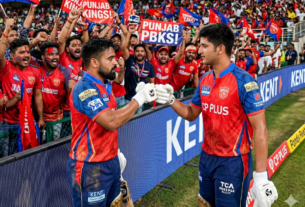
South Africa hit back strongly in New Chandigarh, levelling the five-match T20I series 1-1 with a commanding 51-run win. Quinton de Kock set the tone with a superb 90 off 46 balls, and the visitors maintained control throughout after posting 213 for 4.
India’s chase never took off after Shubman Gill fell in the opening over, and the early dismissals of Abhishek Sharma and Suryakumar Yadav kept them behind the rate. Axar Patel’s promotion to No.3 did not work, Hardik Pandya struggled for fluency, and only Tilak Varma (62 off 34) offered resistance. South Africa’s new-ball spell and disciplined middle-overs bowling ensured India were playing catch-up from the outset.
Here are the four major takeaways from India’s defeat.
Hardik Pandya’s Struggle After the Highs of Cuttack
Hardik Pandya, who dominated the first T20I in Cuttack with a decisive unbeaten 59 off 28 balls, endured a difficult outing in Chandigarh. On a night India needed another strong contribution from him, Hardik never found rhythm. He was 18 off 21 at the end of the 14th over, unable to generate any fluency even as Tilak Varma raced to a 27-ball fifty at the other end.
Trying to force the pace against Lutho Sipamla early in the 15th over, Hardik miscued a hard-length delivery that should have been caught by Marco Jansen at long-on. The next ball, he failed to clear deep midwicket and fell for 21 off 23. At that point, India needed 96 from 34 balls chasing 214, and his dismissal left the lower order with too much to do.
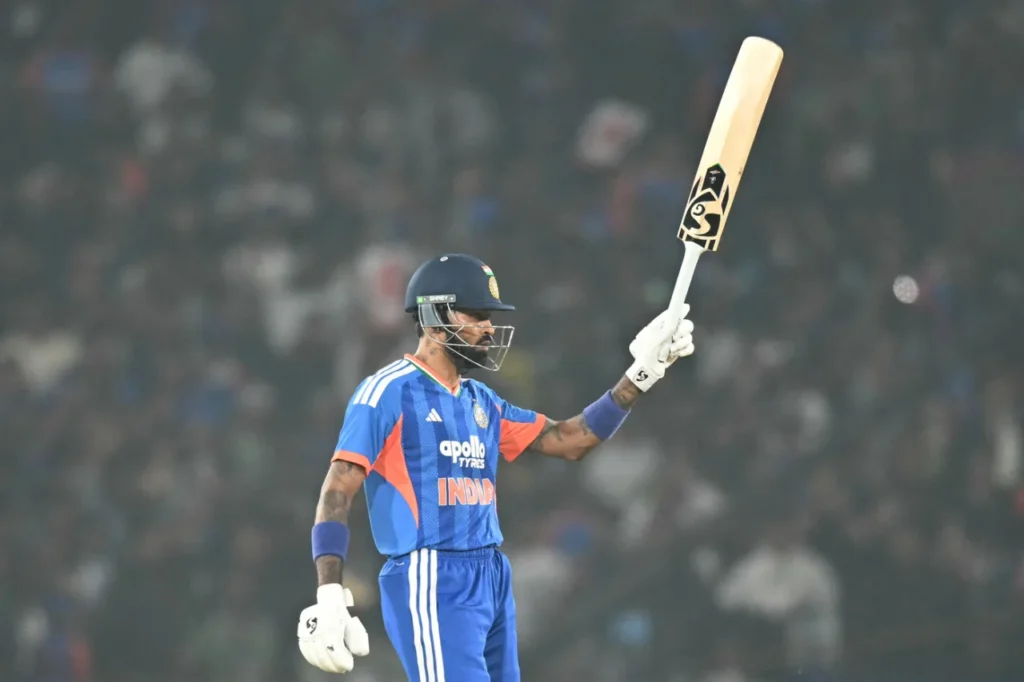
The contrast to Cuttack was sharp. On a slow and damp pitch in the first T20I, Hardik had been the only batter from either side able to strike cleanly, starting with two no-look sixes and finishing with four sixes overall. His all-round presence had given India balance, flexibility in the batting order, and six bowling options, including three attacking ones in Bumrah, Arshdeep and Varun Chakravarthy. India’s strong T20I record with him in the XI (26 wins in 30 games since 2024) underlines his value, but this game showed that India remain heavily dependent on him firing in both departments.
Rare Off Nights for Both Bumrah and Arshdeep
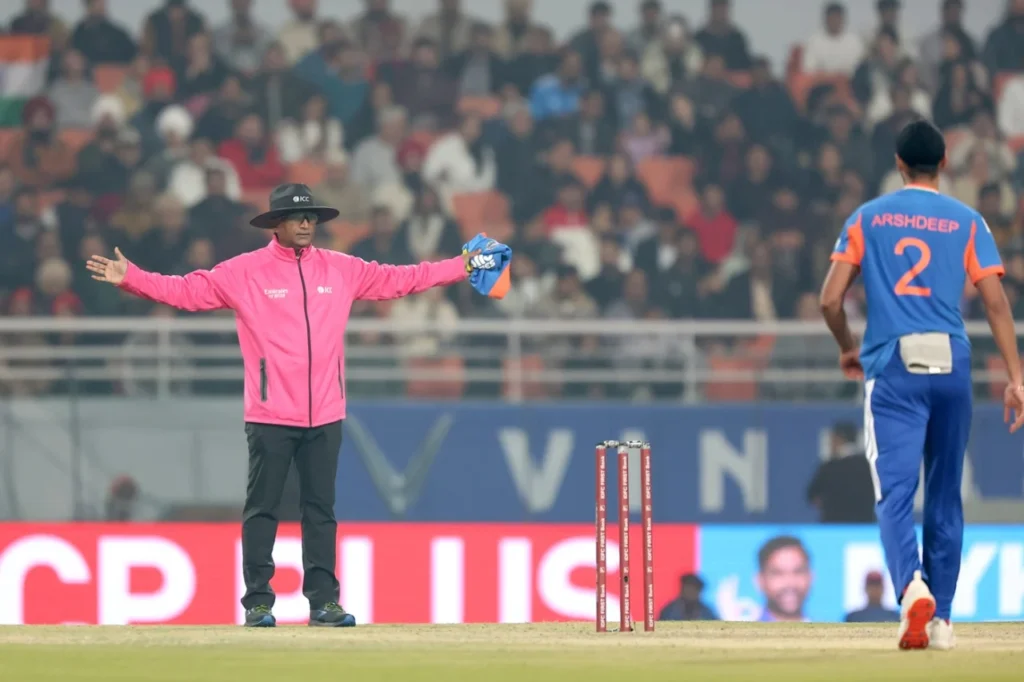
India’s new-ball pair had an uncharacteristically expensive outing. Arshdeep Singh was hit early by Quinton de Kock, who took 27 off 14 balls against him, and his struggles deepened with the dew setting in. He bowled nine wides in the innings, including seven in a marathon 13-ball over that cost 18 runs.
India coach Gautam Gambhir’s frustration in the dugout reflected the extent of Arshdeep’s loss of control. His final figures of 4-0-54 were among his toughest in recent memory, and he matched Naveen-ul-Haq’s record for most deliveries in a single T20I over among full-member nations.
Jasprit Bumrah, too, was below his usual level. He was pulled for two sixes in the fourth over—one each by Reeza Hendricks and de Kock, and conceded 18 in the final over of the innings. Donovan Ferreira took full toll, hitting a full toss straight down the ground and then pulling a well-directed short ball for six. On a two-paced surface, Bumrah used the change-ups sparingly, and South Africa capitalised whenever he missed his length. He finished with 4-0-45, and his expensive final over pushed South Africa to 213 for 4.
Varun Chakravarthy Continues to Trouble Batters Who Don’t Pick Him
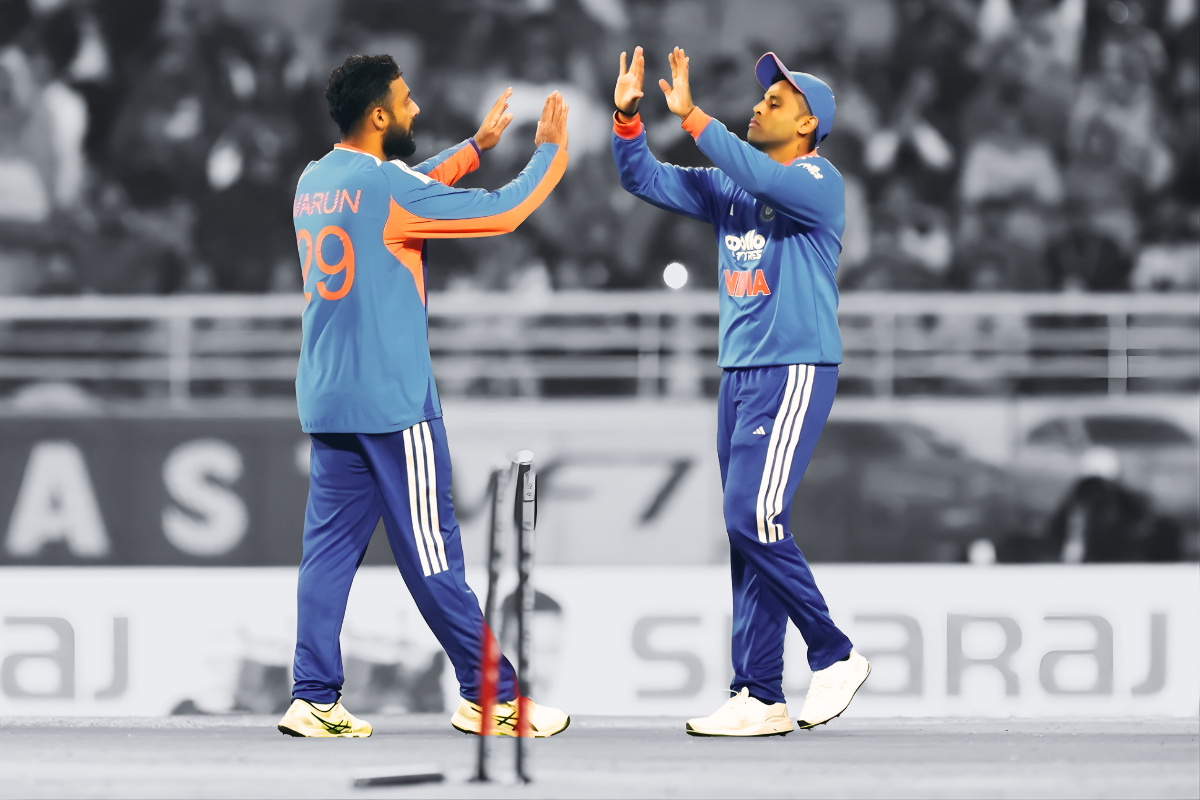
While the seamers struggled, Varun Chakravarthy once again provided control and wickets. He returned figures of 2 for 29 in his four overs, India’s only bowler with an economy rate under eight. He dismissed Reeza Hendricks and Aiden Markram, using his variations effectively against a batting unit that has historically found it hard to pick him from the hand.
Varun remains India’s most reliable defensive spinner in T20Is. Even on a surface where the faster bowlers leaked boundaries, he found ways to restrict scoring. His consistency alongside Jasprit Bumrah makes him a key part of India’s T20 World Cup plans, especially in conditions where spin will hold value.
Axar Patel’s Promotion to No.3 Raises More Questions
India’s decision to send Axar Patel at No.3 backfired. Axar struggled from the outset, finishing the powerplay on 13 off 17, and India ended the first six overs at 51 for 3. Against tall pacers like Lungi Ngidi and Marco Jansen extracting movement, Axar found it difficult to generate momentum. His strength lies in hitting spin, and pushing him up against pace-on bowling worked in South Africa’s favour.
Robin Uthappa questioned the move, arguing that if Axar was sent as a pinch-hitter, he needed to attack from ball one rather than making 21 off 21. Dale Steyn also noted that the promotion had no tactical justification, pointing out that India’s best batters should occupy the top positions, particularly when chasing a large total.
“Solid batters need to come at No.3. If you are sending out a pinch hitter, then he has to play like a pinch hitter,” Robin Uthappa told Star Sports after the game. “If Axar came out as a pinch hitter, he shouldn’t be scoring 21 off 21. He should have got out trying. That is a mindset, even that I don’t agree with. When chasing a big total, you need a solid batter at No.3,”
“A good No.3 would have gotten 60 balls if he came in at No.3. This issue has been going on for a while [experimentation and Axar batting role]. I am concerned this will catch up with India in an important phase in a big tournament like the T20 World Cup,” he added.
Axar has done well in the middle order in recent months, but using him at No.3 in these conditions allowed South Africa to seize early control after Shubman Gill’s failure yet again. With Suryakumar Yadav falling cheaply and Hardik struggling, India were soon too far behind the asking rate. The collective failure also raised questions about whether it was time to plug Yashasvi Jaiswal in the T20I side at the top. Similar questions were raised about Jaiswal during the ODI series and he responded with a hundred in the final game of the series.