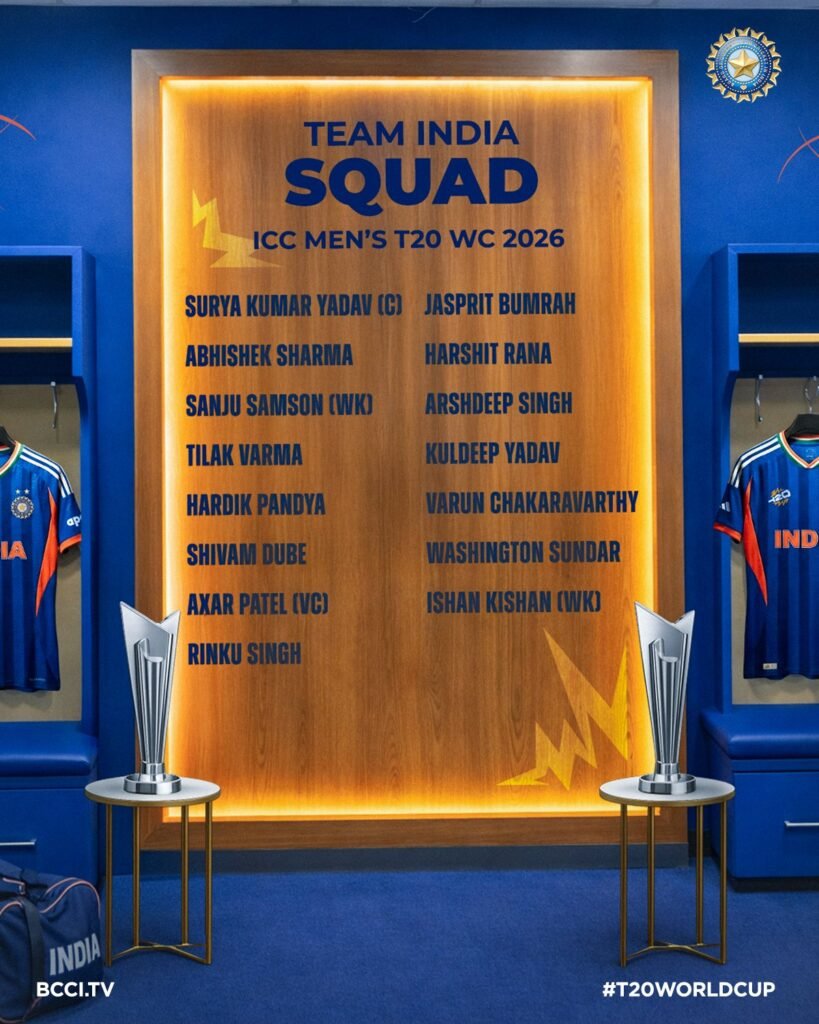
Ishan Kishan’s return to the India squad for the T20 World Cup 2026 marks a clear shift in selection thinking. After weeks of debate around his place, the selectors finally moved decisively, rewarding sustained domestic form and addressing a problem at the top of the order. In doing so, they left out Shubman Gill, a player backed for most of the T20 cycle, and reshaped the wicketkeeping and leadership thinking.
“We’re looking at continuity; we want a keeper batting at the top. We know what a quality player Shubman, he wasn’t playing much T20s. It’s the combination more than anything else. It’s more about combinations, someone has to miss out,” Ajit Agarkar said in the press conference announcing the India squad for T20 World Cup 2026. Defending champions and hosts India were the first to enter the T20 World Cup 2026 squads list.
The call comes on the back of one of the most dominant Syed Mushtaq Ali Trophy campaigns in recent seasons.
Ishan Kishan Stars In Syed Mushtaq Ali Trophy
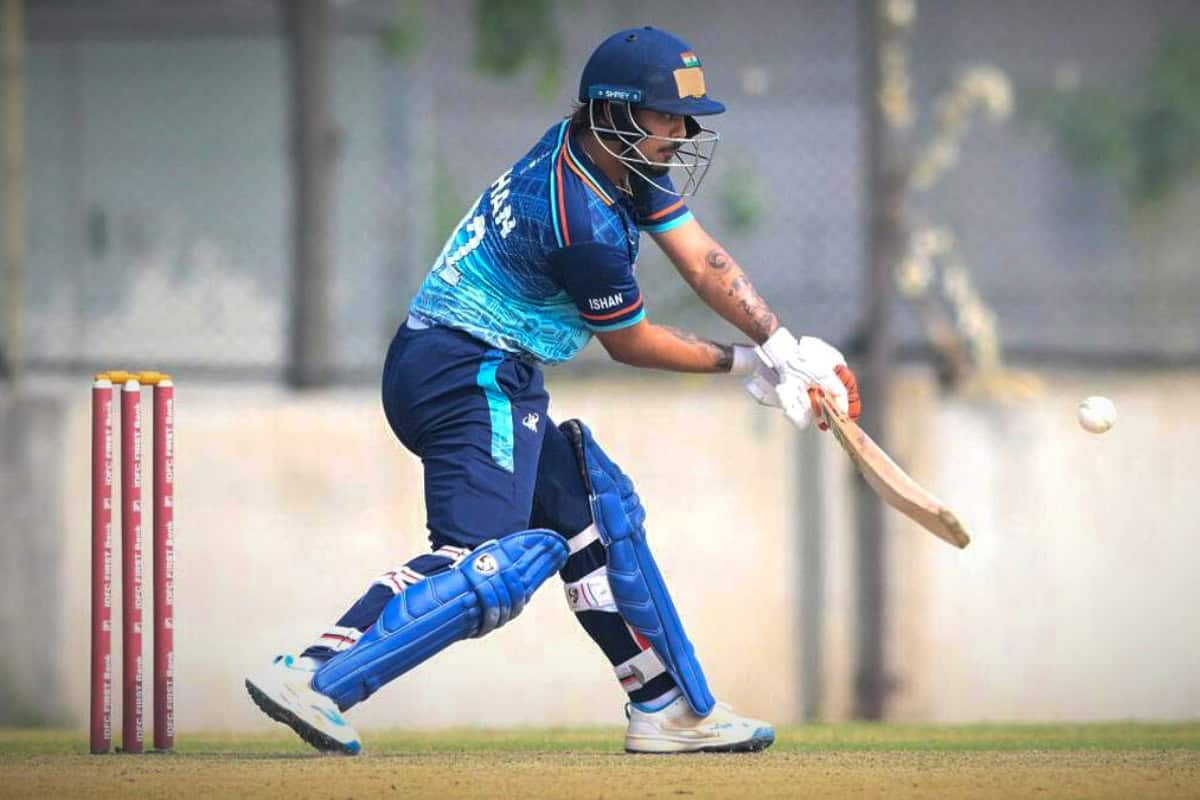
Kishan finished the Syed Mushtaq Ali Trophy as the leading run-scorer, amassing 517 runs in 10 matches at a strike rate of 197.32. He cleared the ropes 33 times and struck two centuries and two half-centuries, combining volume with sustained intent across the tournament.
Unlike earlier domestic seasons where his impact came in patches, this time Kishan delivered consistently, often setting games up inside the Powerplay. The scale of his dominance separated him from the rest of the field.
| Player | Matches | Runs | Average | Strike Rate | 6s | 100s / 50s |
|---|---|---|---|---|---|---|
| Ishan Kishan | 10 | 517 | 57.44 | 197.32 | 33 | 2 / 2 |
| Ankit Kumar | 11 | 448 | 44.80 | 172.30 | 22 | 0 / 5 |
| Kushagra | 10 | 422 | 60.28 | 161.68 | 22 | 0 / 4 |
| Yashvardhan Dalal | 11 | 398 | 49.75 | 148.50 | 19 | 0 / 5 |
| Ajinkya Rahane | 10 | 391 | 48.87 | 161.57 | 16 | 0 / 3 |
| Virat Singh | 11 | 382 | 42.44 | 169.77 | 22 | 0 / 4 |
| Salil Arora | 8 | 358 | 71.60 | 198.88 | 28 | 1 / 1 |
| Kunal Chandela | 7 | 350 | 50.00 | 150.86 | 14 | 0 / 4 |
| Anmolpreet Singh | 10 | 349 | 34.90 | 175.37 | 21 | 0 / 2 |
Gill dropped as selectors reassess top-order balance
Shubman Gill’s omission is the most significant selection call. Gill had been backed through a prolonged lean run, but his inability to convert starts eventually tilted the balance against him. He went 18 T20I innings without a half-century and struggled for impact during the home series against South Africa.
With the World Cup approaching, the selectors moved away from long-term projection and prioritised immediate output. Kishan’s aggressive style at the top was seen as a better fit alongside Abhishek Sharma, especially for conditions in India and Sri Lanka where Powerplay momentum is critical.
India’s first-choice opening pair is now likely Sanju Samson and Abhishek Sharma. Gill’s recent dip — no half-century in 18 T20I innings including the South Africa series where we gave him a 3-star rating — likely worked against him. Axar Patel has been named the vice-captain in his absence.
The top-order role is where Ishan Kishan’s presence becomes clearer. Jitesh Sharma’s exclusion completes the reworked squad structure. With Sanju Samson and Ishan Kishan retained as wicketkeeping options, the selectors opted against carrying a third specialist keeper and using a top-order keeper as back up to Samson.
Kishan’s inclusion, combined with Hardik Pandya and Shivam Dube covering finishing duties, reduced the need for a keeper-batter in the lower order, leaving Jitesh without a clear role.
“When I was not selected in the Indian team, I felt quite bad because I was doing well. But I told myself that if I am not selected with this sort of performance, then maybe I have to do more. Maybe I have to make my team win. Maybe we have to do well as a unit,” he told Sportstar.
That approach worked wonders. “I was doing a lot of work on my batting. So, I have a good idea of my game as well, and where I am going wrong. So, it was about trusting myself and improving the game,” he added.
What changed for Kishan this time
The difference in this selection cycle lies in timing and clarity. Kishan’s domestic run came early enough, was sustained enough, and directly addressed a role India were prepared to reassess.
Rather than being a beneficiary of injuries or short-term shuffles, Kishan forced his way in through weight of performance. Heading into the T20 World Cup 2026, India have chosen impact over incumbency, signalling a sharper, less sentimental approach to squad selection.
Why SMAT numbers still didn’t change the India squad picture For Ishan Kishan
Kishan’s run spree came in a role India are not actively looking to fill, but he remains a great backup, especially with Gill dropped. All his runs were scored as a top-order batter, a position India believe they need more backup for.
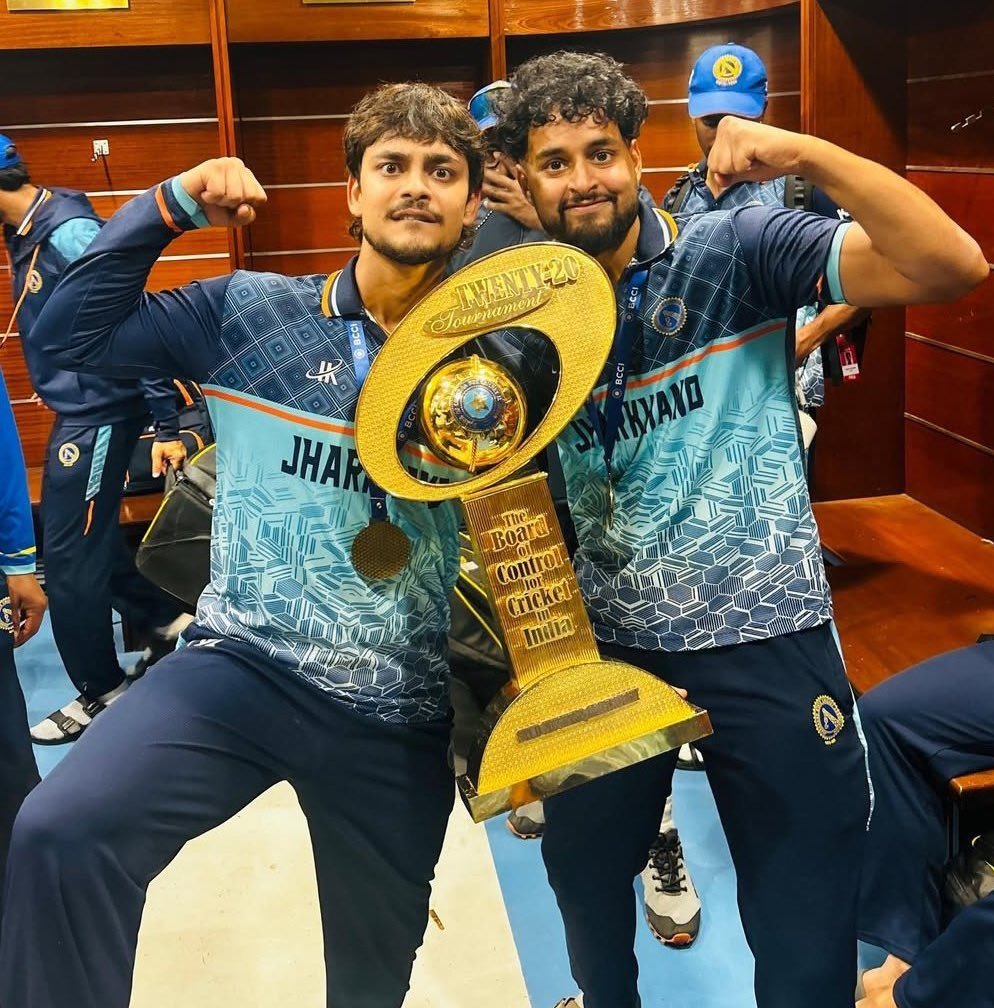
Kishan’s Syed Mushtaq Ali Trophy season strengthened his case on paper, and even if international selection is rarely a straight numbers game, Kishan’s form worked in his favour.
The data makes one thing clear: Kishan did everything asked of him in domestic cricket. The reality is that, heading into the T20 World Cup 2026, India are prioritising recent form and Kishan has benefitted from it.