Australia did not lose the Boxing Day Test at the Melbourne Cricket Ground because England suddenly became the better side. They lost because they engineered conditions that stripped away their biggest advantage and played straight into England’s hands.
On a pitch designed to be chaotic, volatile and bowler-friendly from ball one, the margin between the two pace attacks narrowed dramatically. In doing so, Australia removed the one thing that has consistently separated them from England in this Ashes series: their ability to dominate games once the ball softens and batting becomes possible.
England didn’t steal this Test. Australia handed it to them, starting with the surface.
A Pitch That Neutralised Australia’s Strength
Australia came into the Boxing Day Test with a settled, experienced pace attack, built for long spells on flat, hard Australian wickets. England, by contrast, arrived with an injury-hit bowling unit, leaning heavily on Josh Tongue and Brydon Carse — talented, but unproven in Australian conditions.
On a traditional MCG pitch, one with early movement, Australia would have backed themselves to bat England out of the game, force long bowling spells, and expose England’s lack of depth.
Instead, the pitch produced violent seam movement, uneven bounce, and constant lateral deviation from the first session onward. Survival, not skill, became the primary requirement for batters. That erased Australia’s edge.
When every ball is a potential wicket, quality gaps disappear. Discipline matters more than pedigree. Suddenly, England’s bowlers were not chasing the game, they were dictating it.
Why This Surface Suited England More Than Australia
England’s modern Test approach thrives on one key idea: if conditions are hostile, don’t try to survive — attack. This pitch rewarded exactly that mindset.
Harry Brook’s counter-attack in the first innings, Ben Duckett and Zak Crawley’s opening blitz in the chase, and Jacob Bethell’s fearless strokeplay were all enabled by a surface where standing still and defending was the most dangerous option.
Australia, meanwhile, looked caught between plans. Their batters neither fully attacked nor fully trusted defence. The result was predictable: soft dismissals, indecision outside off stump, and collapses in both innings.
On a flatter pitch, Australia’s superior patience, depth and experience would have forced England into mistakes. On this pitch, England were free to embrace chaos.
Australia Had No Need To Manufacture Chaos
The irony is that Australia did not need a tricky pitch to win.
They were already 3-0 up in the series. England were short on confidence, missing key bowlers, and struggling to score consistently. A flatter surface would have tested England’s weakest point: their ability to bowl long spells and maintain control once the ball stopped moving.
Instead, Australia created a contest where every batter was vulnerable, including their own.
Both teams were bowled out for under 160 three times in the match. When totals are that low, one aggressive half-hour, like England’s 51-run opening stand in the fourth innings, can decide the game. That is precisely what happened.
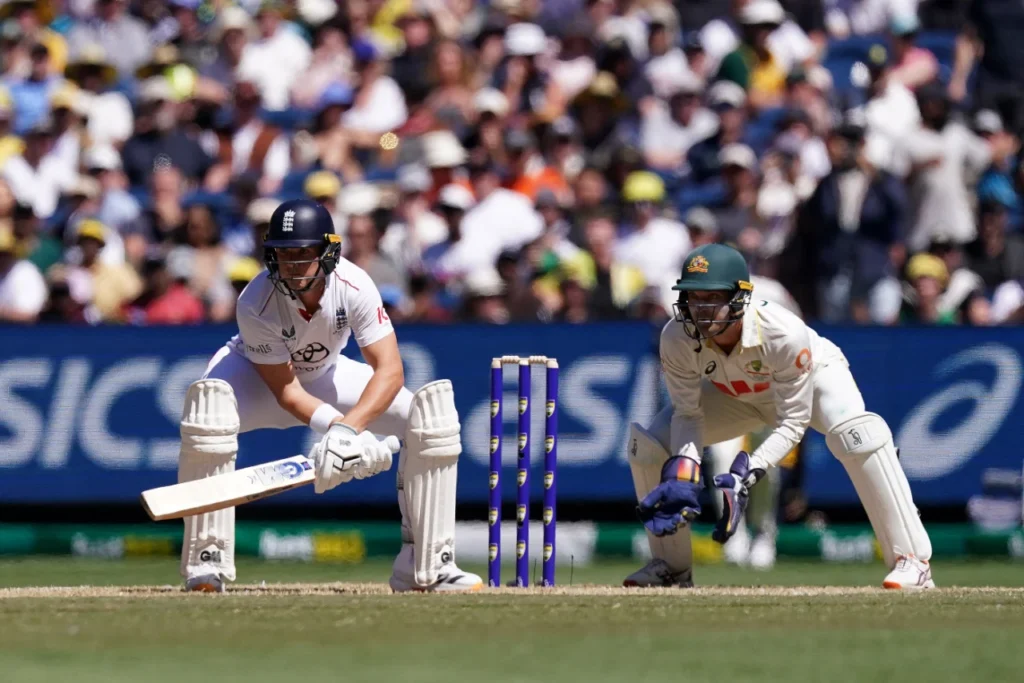
A Pitch That Made Bazball Logical, Not Reckless
Much has been made of England’s aggression in the chase, but on this surface, it was the only rational approach.
Waiting for bad balls was not an option. Playing late and soft-handed did not guarantee survival. The ball had a mind of its own. England understood this faster than Australia.
Duckett and Crawley’s opening stand didn’t just reduce the target, it shifted psychological pressure back onto Australia, who suddenly realised they didn’t have enough runs to defend. That pressure should never have existed at the MCG.
ALSO READ: Most Consecutive List A Centuries: Former CSK Duo Top List
Australia’s Batting Exposed By Their Own Conditions
Australia’s batting failures were real, but they were also predictable given the pitch.
Steve Smith’s first-innings drive, Labuschagne’s repeated pokes outside off stump, and the absence of any substantial top-order partnership were symptoms of a deeper issue: Australia were forced into survival mode too early, too often.
Only Travis Head, by counter-attacking selectively, looked capable of shaping the game. When he fell to Brydon Carse’s unplayable delivery, the match effectively swung.
On a truer surface, Australia would have had time. Here, they had none, and that was by design.
The Broader Consequence: A Self-Inflicted Defeat
This was not a case of England outsmarting Australia tactically over five days. It was a two-day shootout on a surface that turned the contest into a lottery.
England embraced the chaos. Australia assumed their class would carry them through it. It didn’t.
By choosing a pitch that compressed skill differences, amplified variance, and rewarded high-risk intent, Australia undermined the very qualities that have made them dominant at home.
In doing so, they gave England their first Test win in Australia in nearly 15 years, and avoided a whitewash that had looked inevitable.
Australia Have The Urn Safe, But Deserves This Loss
England deserve credit for executing better within the conditions. But Australia deserve scrutiny for creating those conditions in the first place.
At the MCG, on Boxing Day, with the Ashes already secured, Australia should have backed their strength. Instead, they chased spectacle, and paid for it.
This was not Bazball winning the Test. This was Australia losing control of it before the first ball was bowled.