The ICC’s updated ball rule has unintentionally widened the gap between teams batting first and second in day-night ODIs in India.
What is the new one-ball rule?
Effective July 2, 2025, the ICC changed ODI playing conditions:
“Two new balls will be used from the start of an innings until the end of the 34th over. After the 34th over, the bowling team will choose one of the two balls, which they will use at both ends from overs 35 to 50.”
The intention was to “readdress the balance between bat and ball.” In India, however, the balance has shifted further in favour of the chasing team.
Why is this rule causing imbalance?
First innings conditions
- Both balls soften quickly on abrasive afternoon surfaces
- Limited swing and reduced pace off the pitch
- Finishing power declines due to softer ball
- Middle-overs scoring slows considerably
Examples:
- 1st ODI (Ranchi): India stalled through the middle overs
- 2nd ODI (Raipur): Only 74 runs in last 10 overs with eight wickets in hand
Second innings conditions
- Dew removes grip and reverse swing
- Harder chosen ball remains easier to hit until the end
- Spinners lose control; seamers lose yorker execution
- Fielding errors increase under wet conditions
Examples:
- Ranchi: South Africa reached 332 in a near chase
- Raipur: South Africa successfully chased 358 with balls to spare
ALSO READ: Why BCCI Benefits If Cameron Green Earns More Than 18 Crores
Toss becomes a deciding factor
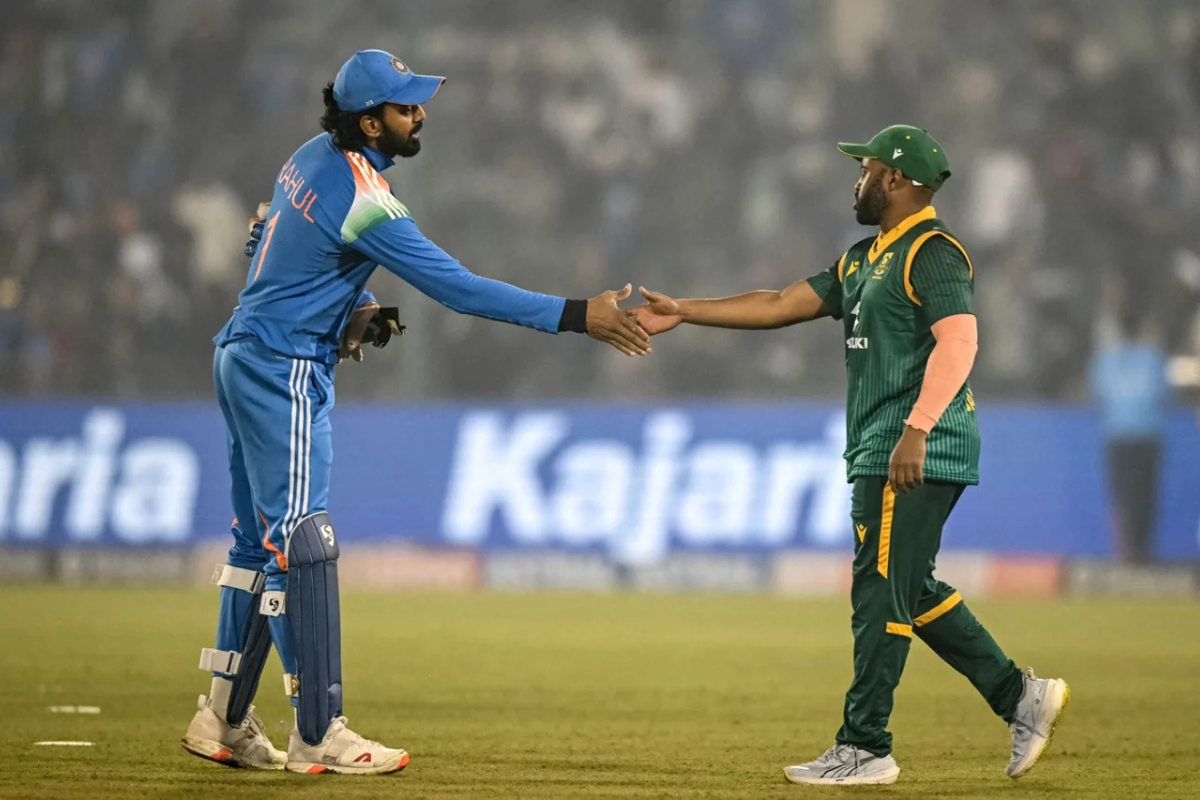
India have lost 20 ODI tosses in a row. In both matches of this series, they were asked to bat first and then defend in dew. KL Rahul summed up the disadvantage: “Bowlers obviously are trying their heart out, but there are areas to improve. There are a few soft boundaries that we gave away, even in the field. If we can tighten up all three aspects of the game and get a bit more sharper, then maybe those 20-25 runs will go our way and we’ll be on the other side.”
“With the bat, I know that 350 looks good, but that’s also been the chat in the dressing room even after the last game ‘how can we get that extra 20-25 runs’, just so that the bowlers find some cushion when they bowl with the wet ball.”
Impact on competitive fairness
| Match Phase | Ball Condition | Advantage |
|---|---|---|
| Overs 1-34 | Two balls soften | Batting first slows |
| Overs 35-50 (1st inns) | One softened ball | Hard to finish strongly |
| Overs 35-50 (2nd inns) | Harder ball + dew | Chasing becomes significantly easier |
The original goal has reversed: Instead of increasing contest, the rule has diluted the challenge for teams batting second.
The one-ball-after-34-overs rule, when combined with India’s heavy dew factor, has amplified chasing dominance. Even totals above 350–360 are proving inadequate, and the IND vs SA series is raising concerns about the competitive balance and long-term sustainability of day-night ODIs in these conditions.