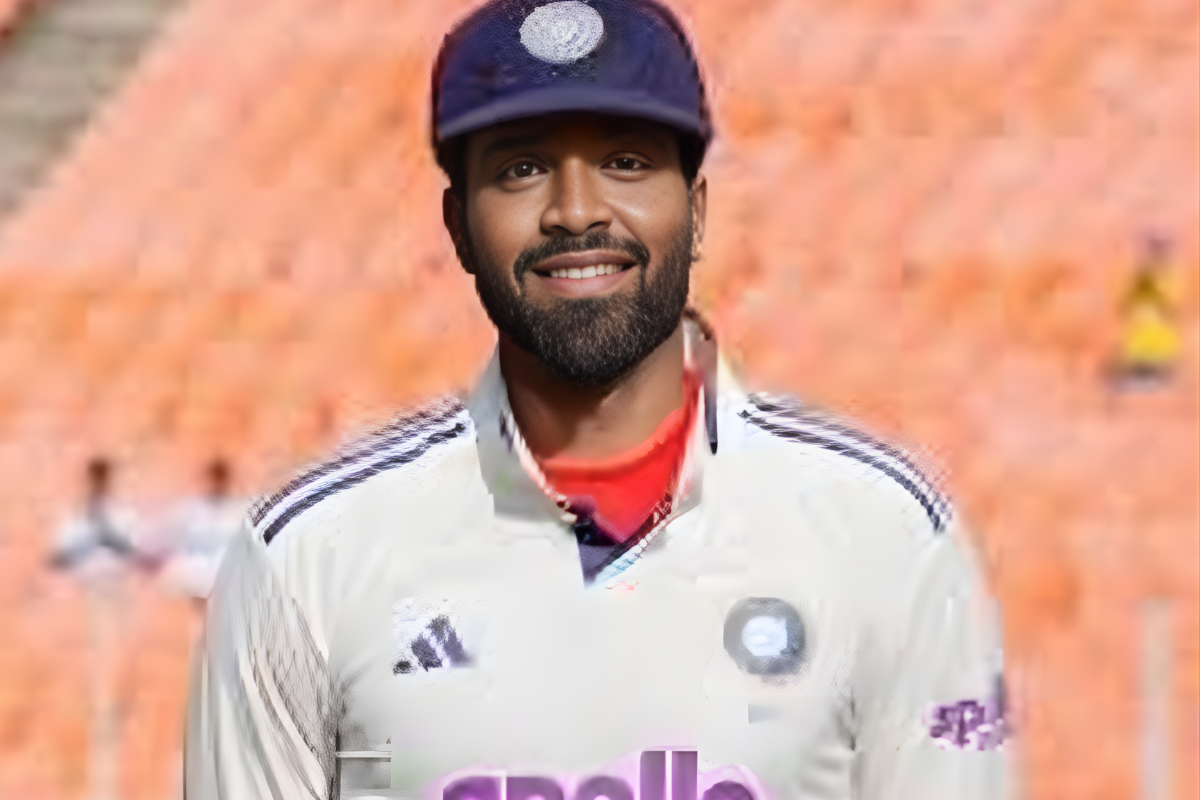
Hardik Pandya’s Test career has long been spoken about in the past tense. Since his last appearance in 2018, India have moved through multiple cycles, captains, and combinations in red-ball cricket without ever finding a like-for-like replacement. Yet, recent comments from Robin Uthappa have reopened a debate that never truly went away: is Hardik Pandya’s Test chapter really closed?
Uthappa believes it might not be. And more importantly, he believes Pandya could still solve several structural problems in India’s Test team, if fitness and workload are managed with care.
Hardik Pandya A Modern No. 7 for Tests
Speaking on his YouTube channel, Robin Uthappa laid out a clear, pragmatic argument rather than a nostalgic one. He did not suggest Pandya returning as a frontline fast bowler or an all-action workhorse. Instead, he framed Pandya as a modern Test No. 7, a role that has evolved significantly over the last decade.
“If Hardik Pandya returns to the No. 7 spot in Tests, it would be wonderful,” Uthappa said. “The way he’s playing, anything can happen. It’s cricket. Never say never. If Hardik decides to play Test cricket, will BCCI ask him not to play? If he says he wants to play and wants to win the World Test Championship, I don’t think they would say no.”
Uthappa also addressed the biggest concern head-on: bowling workload.
“Are all-rounders bowling 20 overs? Nitish Kumar is not bowling that much. He’s bowling around 12 overs. If Hardik bowls 12 to 15 overs per innings, I think he can do it with the way he’s fit now, the way he’s bowling and batting. It’s his own decision.”
This is a crucial point. Modern Test cricket no longer demands marathon spells from seam-bowling all-rounders. Instead, teams value control, balance, and flexibility. These are qualities Hardik naturally brings to the table.
Hardik Pandya Test Record: Better Than It Looks
Hardik’s Test numbers are often played down, but that undersells their context. In 11 Tests between July 2017 and August 2018, he scored 532 runs at an average of 31.29 and took 17 wickets at 31.05. Those numbers mirror the output of several respected Test all-rounders over much longer careers.
More importantly, Pandya delivered impact moments. He scored a counter-attacking century in Sri Lanka, a match-shaping 90-odd in South Africa, and a five-wicket haul at Trent Bridge in England. He was not padding numbers at home against friendly conditions, he was influencing games overseas, which is exactly what a pace bowling all-rounder is expected to do.
During that 13-month stretch, Pandya progressed rapidly. He moved from No. 8 to No. 6, began batting with increasing responsibility, and showed he could shift momentum in tough situations. Few Indian seam-bowling all-rounders have shown that dual impact with such consistency.
Among Indian seamers with both a Test hundred and a five-for, Pandya stands out statistically. His batting average is higher, and his bowling average lower, than most peers who managed similar feats. Even on days when he wasn’t decisive, he still offered balance, something India have repeatedly lacked since his exit.
ALSO READ: Did Mumbai Indians Create An Unfair Advantage At IPL 2026 Auction?
Why Pandya’s Absence Still Hurts India Test Team Balance
India’s post-Pandya era in Tests has been marked by constant compromise. Without a genuine seam-bowling all-rounder, selectors have had to choose between batting depth and bowling strength, especially overseas.
The recent Border-Gavaskar Trophy highlighted this issue clearly. Nitish Kumar Reddy debuted as a seam-bowling all-rounder and grew impressively as a batter, scoring a century at the MCG. But across five Tests, he bowled only 44 overs and finished with five wickets at an average of 38. Useful, but not enough to function as a reliable fourth seamer.
India eventually resorted to playing two spinners in conditions that didn’t demand it, purely to retain batting depth, a structure that didn’t hold.
Shardul Thakur has been the closest alternative, offering memorable cameos with bat and ball. But his inconsistency has prevented him from locking down the role long-term.
Hardik, at his peak, eliminated these trade-offs. He could bat at six or seven, bowl as the fourth seamer, and allow India to pick their best bowlers without weakening the batting order. That “two cricketers in one” effect is rare and invaluable.
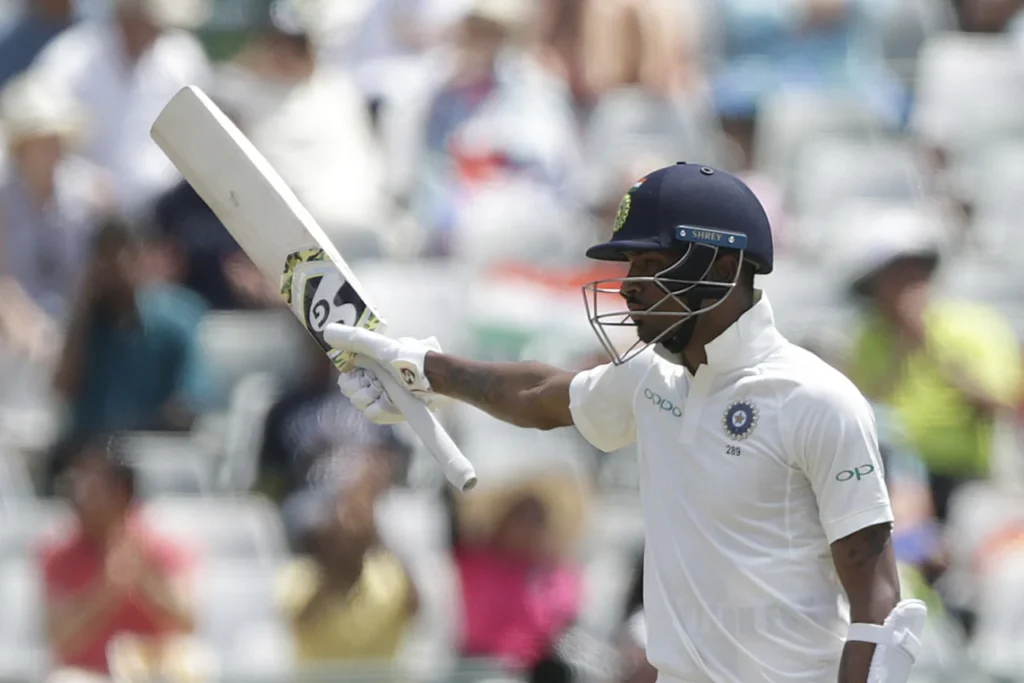
Fitness, Injuries, and the Reality Check
There is no ignoring why Hardik stepped away from Test cricket. A recurring back injury, including a stress fracture that left him stretchered off during the 2018 Asia Cup, forced a recalibration of his career. As Ravi Shastri later put it bluntly, “his body cannot cope with Test cricket.”
Since then, Pandya has focused exclusively on white-ball formats, carefully managing his bowling loads and resting strategically. That approach has prolonged his career and allowed him to remain central to India’s limited-overs success.
Any Test return would have to operate within those same boundaries. A full five-Test series, bowling long spells, week after week, is unrealistic. But selective appearances, particularly in overseas Tests where balance matters most, are possibly not.
At 31, Hardik brings leadership experience from IPL titles, international white-ball captaincy, and high-pressure ICC tournaments. As India enter a transition phase following multiple senior retirements, that leadership value becomes relevant.
Pandya’s Test potential has often been compared to Ben Stokes, not in terms of career length, but impact. Both are genuine match-winners who tilt the balance of a Test simply by being in the XI. England felt structurally weaker whenever Stokes was unavailable; India have felt the same absence with Pandya, albeit for far longer.
The difference is opportunity. Pandya played only 11 Tests, barely a tenth of Stokes’s career. That brevity is why his Test story feels unfinished.
Is a Hardik Return To Test Cricket Realistic?
From a purely cricketing perspective, Robin Uthappa’s argument makes sense. Hardik does not need to be overused. He does not need to bowl 20 overs an innings. If managed carefully, he could strengthen India’s Test balance in ways no current option consistently does.
The bigger question is desire. Pandya has built his career around longevity and impact in white-ball cricket. A Test comeback would risk that equilibrium. As Uthappa himself said, “It’s his own decision.”
His Test chapter may be closed for now, but if Hardik Pandya chooses to, it may not be as firmly sealed as many believe.