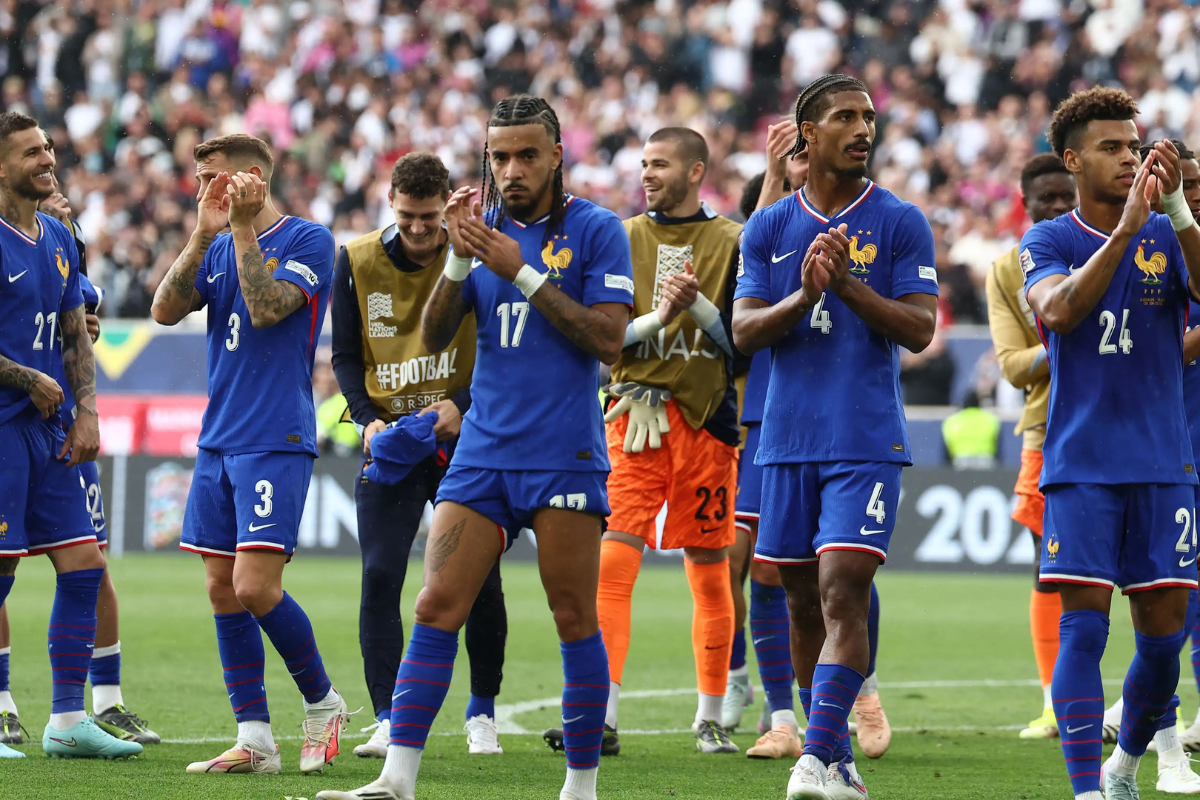
Arsene Wenger has spent the week doing more than just naming favourites for World Cup 2026. Between defending a 48-team format and hailing France as “super favourites” ahead of England, FIFA’s chief of global football development has outlined what kind of squad he thinks will actually win a bloated, travel-heavy tournament in North America: one with more elite options than anyone else.
For all England’s progress and flawless qualifying under Thomas Tuchel, Wenger’s message is clear – in a World Cup built as a marathon, nobody is better equipped than France to last the course.
England on the brink – but still “have to make the step”
On England, Wenger is generous but pointed. They are “one of the favourites”, he says, and the evidence is strong: a perfect qualifying campaign, eight wins from eight and not a single goal conceded, has given Tuchel’s side the kind of defensive base that previous generations never quite managed.
“They’re always nearly there,” Wenger notes – semi-finals, a final, quarter-final runs – but the wording matters. England “have to make the step” from contenders to champions. The implication is that, in a 32-team tournament, they were already close. In a 48-team version, the bar is being raised again.
Tuchel himself has embraced that pressure, speaking openly about England being “brave enough to dream” of winning the World Cup, while the FA hierarchy talk up the energy and clarity he has brought since replacing Gareth Southgate.
Optimism is real. So is the ceiling Wenger is hinting at.
France built for a 48-team World Cup 2026
Where he becomes genuinely emphatic is on France. Trying, as he puts it, to be “as objective as possible”, Wenger labels them “super favourites” for 2026 – and he gives a very specific reason: they have more world-class strikers than anyone else.
In other words, this isn’t just about Kylian Mbappe. It’s about what happens when the game is stretched, when legs are heavy, when squad players decide knockout ties. With Ousmane Dembele, Marcus Thuram, Randal Kolo Muani, Hugo Ekitike, Desire Doue and others behind Mbappe, France’s attacking bench looks like a starting front line for most national teams.
In Wenger’s framework, that kind of depth is not a luxury – it’s a tournament-winning asset. The expanded format, more games and more travel mean more minutes for the “next man up”. It is here that he subtly separates France from the rest of the pack, England included. Check the full 26-member France squad for World Cup 2026.
Expansion, heat and the “marathon” logic
Wenger has also become the public face of FIFA’s defence of the 48-team World Cup. He insists that the expansion will not dilute quality, arguing that qualifying itself is a filter and that more nations simply reflects a more global game.
That stance dovetails neatly with his competitive logic. More teams mean:
- more group-stage matches,
- more knockout fixtures for those who go deep,
- and more stress from heat, travel and pitch conditions across the United States, Canada and Mexico.
The World Cup 2026, in Wenger’s mind, becomes a test of squad management as much as tactics. Deep benches, especially in forward areas, aren’t just nice to have; they’re the difference between losing a semi-final in extra time and having the firepower to finish it before then.
On that front, France’s surplus of forwards looks tailor-made for the new era.
EXPLAINED: Why Ruben Amorim Hooked Ayden Heaven At Half-Time
Technology, VAR and the push to eliminate “honest mistakes”
Even the debate around VAR reinforces the same theme: FIFA are trying to strip chance out of the equation as much as possible. Referees’ chief Pierluigi Collina has backed using VAR to check corner-kick decisions at the World Cup, arguing it would be a “pity” if an “honest mistake” on a corner led to a decisive goal.
Any extension of VAR – whether on corners or second yellow cards – is aimed at reducing randomness. For big nations with deeper squads and more control over games, fewer random breaks of luck should, in theory, be good news.
In a tournament where officiating, conditions and match load are all being engineered towards fairness and endurance, Wenger is effectively saying: back the side with the strongest 23, not just the strongest XI.
A bigger World Cup, but familiar favourites
Taken together, Wenger’s comments form a coherent picture. He backs a bigger World Cup, believes quality will hold, supports using more technology to minimise errors – and then tips the country with the deepest attacking reserves as “super favourites”, just ahead of an England team that still has one psychological and competitive rung left to climb.
Expansion may change the size and shape of the World Cup. It may pull in new nations and new storylines. But if Wenger is right, World Cup 2026 will still be decided by an old truth: in the very biggest tournaments, it is the giants with the deepest squads – and right now, above all, France – who start a step ahead of everyone else.